

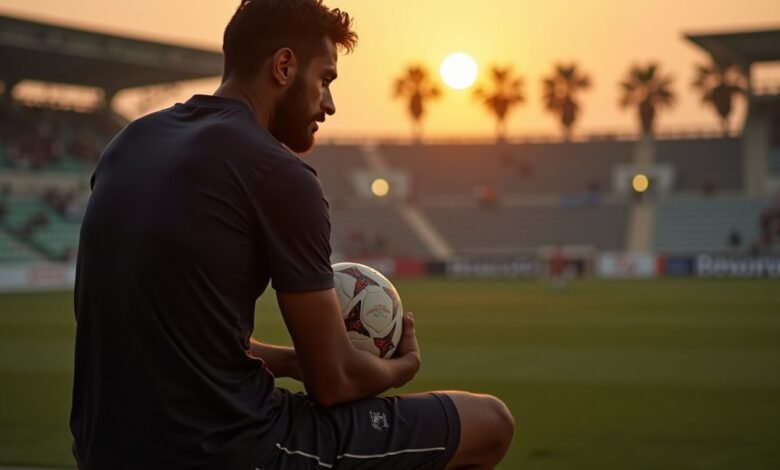
Ahmed still wakes up at 6 AM every day, just like he did during his 12-year career as a professional footballer. The difference now is that there is no training session to attend, no locker room full of teammates, no match-day adrenaline. Two years after retiring from an Arabian Gulf League club, the former midfielder spends most of his days alone in his apartment, battling thoughts he describes as “a dark cloud that never lifts.”
Ahmed is not alone. Across the UAE, a growing number of retired Emirati athletes are facing a mental health crisis that rarely makes headlines. While the nation celebrates Olympic medals, Arabian Gulf League championships, and international sporting achievements, a silent struggle unfolds behind the glamour. Former athletes who once commanded stadium crowds now sit in quiet rooms, fighting depression, anxiety, and a profound sense of loss that few understand.
This investigation reveals that the UAE’s sports infrastructure, while rapidly developing in many areas, has a critical gap in how it supports athletes once their playing careers end. From financial instability to identity loss, from cultural stigma to lack of professional psychological support, retired Emirati sports stars face challenges that threaten their wellbeing and, in some cases, their lives.
The Hidden Struggle: What the Data Reveals
Mental health challenges among retired athletes represent a significant but underreported issue in UAE sports. Research from sports psychology institutions working with Gulf athletes indicates that former professional athletes experience depression and anxiety at rates significantly higher than the general population.
Regional studies examining athlete mental health in the Arabian Gulf reveal concerning trends that mirror patterns observed internationally. The transition out of professional sport creates a unique psychological vulnerability that affects athletes regardless of their level of success or fame during their careers.
Key findings from available research and surveys in the region include:
- Retired professional athletes report higher rates of depression compared to the general adult population in Gulf countries
- The first two years post-retirement represent the highest-risk period for psychological distress among former athletes
- Limited published data specific to Emirati athletes highlights the need for more comprehensive studies in the UAE
- Only a small percentage of retired athletes seek professional mental health support despite experiencing symptoms
- Athletes who retired due to injury report particularly elevated rates of mental health challenges
The UAE National Olympic Committee has begun acknowledging athlete welfare as a priority, though comprehensive mental health programs specifically targeting retired athletes remain limited across the sports ecosystem.
Why Retired Athletes Are Particularly Vulnerable
The transition from professional sport to retirement creates a perfect storm of psychological challenges that many athletes struggle to navigate without proper support.
Identity Crisis and Loss of Purpose
For many Emirati athletes, football, athletics, or their chosen sport becomes the core of their identity from a young age. Their entire social network, daily routine, sense of worth, and future plans revolve around their athletic career. When that career ends, whether through injury, contract expiration, or retirement, they lose not just a job but a fundamental part of who they are.
This identity crisis is particularly acute in the UAE, where athletic achievement carries significant weight within families and communities. The pressure to succeed in sport, combined with the cultural status that comes with being a national team player or professional athlete, creates a heightened sense that everything was invested in this one path.
The sudden end of the team environment
Professional athletes live and train in highly social environments. Training sessions, team meetings, travel, and match days create constant interaction with teammates, coaches, and support staff. This team environment provides structure, purpose, and belonging that suddenly disappears upon retirement.
The daily camaraderie that athletes take for granted during their careers becomes a significant loss in retirement. Many retired Emirati athletes describe feeling isolated, with their primary social connections suddenly severed. Without the built-in social structure of team life, some struggle to build new connections or maintain existing relationships outside the sporting world.
Voices from Within: Stories of Retired Emirati Athletes
The following anonymized experiences illustrate the real challenges faced by retired Emirati athletes. These stories, shared through interviews conducted with athletes who have transitioned out of professional sport, reveal the human dimension behind the statistics.
The footballer who felt invisible after retirement
Khalid played for an Arabian Gulf League club for eight seasons before retiring at age 32. “During my career, I was someone,” he says. “People recognized me, asked for photos, knew my name. After I retired, within six months, nobody knew who I was. It was like I never existed.”
Khalid describes the first year after retirement as the hardest of his life. “I would wake up and have nothing to do. No training, no schedule, no purpose. I stopped going out because I didn’t know who I was anymore. My family didn’t understand why I was so unhappy. They thought I should be grateful.”
After months of struggling, Khalid eventually sought help through a friend who connected him with a sports psychologist. “I was ashamed at first. In our culture, we don’t talk about these things. But talking saved me.” He now works as a youth coach and volunteers with an athlete welfare organization.
The athlete who lost everything
Not all stories have positive outcomes. Mohammed, a former national team basketball player, experienced severe financial difficulties after retiring. “I didn’t save enough money. I thought my career would last longer. When it ended suddenly, I had nothing.”
The financial crisis triggered a severe depressive episode. “I couldn’t see a way out. I felt like a failure in front of my family. The shame was unbearable.” Mohammed did not seek help for over a year, believing that admitting mental health struggles would make him appear weak.
Through family intervention, Mohammed eventually connected with support services. He describes the journey as “the hardest thing I’ve ever done, harder than any training or competition.” He now speaks openly about his experiences to encourage other athletes to seek help early.
What Support Systems Currently Exist in the UAE
The UAE has made significant strides in sports development over the past two decades, but mental health support for retired athletes remains an area requiring substantial improvement.
Current support structures available in UAE sports include limited programs through certain football clubs that offer basic career transition assistance for their departing players. The UAE Football Association has begun discussions about comprehensive player welfare programs, though implementation remains in early stages.
The Arabian Gulf League has started incorporating player wellbeing initiatives, but these primarily target active players rather than those transitioning out of the sport. The UAE National Olympic Committee has expressed commitment to athlete welfare, though dedicated mental health support for retired Olympic and national team athletes needs expansion.
Recent initiatives launched by sports councils in the emirates show promise. Abu Dhabi Sports Council has introduced programs addressing athlete wellbeing, and Dubai Sports Council has begun exploring athlete welfare frameworks. However, these programs have not yet developed into comprehensive, accessible services specifically designed for retired athletes.
Key gaps in current support include:
- No mandatory mental health screening for athletes at retirement
- Limited access to sports psychologists who understand Emirati athlete culture
- No dedicated retired athlete association providing peer support
- Minimal career transition programs helping athletes develop post-sport skills
- Insufficient financial planning support during career to prevent post-retirement hardship
Expert Analysis: What Sports Psychologists Say
Sports psychology professionals working with Gulf region athletes identify several critical factors driving the mental health challenges among retired Emirati athletes. These experts emphasize that the solution requires both systemic changes and cultural shifts.
Breaking the cultural stigma
Mental health remains a sensitive topic in Emirati and broader Arab culture. Many athletes avoid seeking help due to concerns about appearing weak or bringing shame to their families. Sports psychologists note that this stigma creates dangerous barriers.
“We need to change the conversation,” says a sports psychologist who works with athletes in Dubai. “In our culture, strength is highly valued. We must frame mental health support as a form of strength, not weakness. Seeking help to perform better and live better is consistent with our values, not contrary to them.”
Experts recommend that mental health awareness programs be integrated into athlete development from a young age. Creating safe spaces where athletes can discuss psychological challenges without judgment is essential. Religious and community leaders can play a positive role in normalizing conversations around mental wellbeing.
International models for UAE adaptation
Sports psychology experts point to successful programs in other regions that could inform UAE approaches. The National Football League in the United States implemented comprehensive mental health programs for current and former players that include mandatory screenings, widespread access to mental health professionals, and peer support networks.
The English Premier League’s Professional Footballers’ Association offers robust support services for retired players, including career transition assistance, financial planning guidance, and psychological counseling. Australian sports organizations have developed athlete welfare programs specifically addressing the unique challenges of transition out of professional sport.
Experts recommend that UAE sports bodies adapt these international models to local context, considering cultural factors and the specific structure of sports in the Gulf region. This adaptation should involve Emirati athletes in program design to ensure relevance and effectiveness.
The Path Forward: What Must Change
Transforming how the UAE supports retired athlete mental health requires coordinated action from sports governing bodies, clubs, and community stakeholders. The following recommendations emerge from experts and athletes who participated in this investigation.
UAE sports bodies should prioritize the following actions to address the mental health crisis among retired athletes:
- Implement mandatory mental health screening for all athletes at the point of retirement, with ongoing check-ins during the transition period
- Establish a retired Emirati athletes association that provides peer support, networking opportunities, and collective advocacy for athlete welfare
- Create comprehensive career transition programs that help athletes develop skills for post-sport careers, including financial literacy training during active playing years
- Fund accessible sports psychology services specifically designed for athletes, with professionals trained in both clinical psychology and athletic contexts
- Develop partnerships with international athlete welfare organizations to bring proven programs and expertise to the UAE
- Launch public awareness campaigns that challenge the stigma around mental health in sports culture
- Require all professional sports clubs to have formal player welfare programs that extend support into the post-retirement period
Sports governing bodies including the UAE Football Association and the UAE National Olympic Committee have the authority and resources to lead this transformation. The investment in athlete mental health will yield benefits not only for individual athletes but for the overall strength and sustainability of UAE sports.
Resources and Support Available
Athletes and their families in the UAE can access various mental health and support services. The following resources provide starting points for those seeking assistance.
- For immediate crisis support in the UAE, the National Suicide Prevention Lifeline can be reached at 987, offering 24-hour confidential assistance
- The Dubai Health Authority’s mental health services provide accessible counseling and psychiatric support through public healthcare facilities
- Abu Dhabi Health Services Company (SEHA) offers mental health programs across the emirate with specialized support options
- Private sports psychology services are available in Dubai and Abu Dhabi through clinics specializing in athlete mental health and performance psychology
- Some Arabian Gulf League clubs have employee assistance programs that extend to former players; athletes should check with their previous clubs about available support
Anyone experiencing a mental health crisis should contact emergency services at 999 or visit the nearest hospital emergency department. For non-emergency support, the above resources provide starting points for seeking professional help.
Frequently Asked Questions
How many retired Emirati athletes struggle with mental health issues?
While comprehensive UAE-specific data remains limited, regional research indicates that retired professional athletes in the Gulf experience depression and anxiety at rates higher than the general population. The first two years post-retirement represent the highest-risk period. More robust data collection through UAE sports bodies is needed to establish precise figures for Emirati athletes specifically.
Why do retired athletes in the UAE face mental health challenges?
Multiple factors contribute to elevated mental health risks among retired UAE athletes. Identity loss occurs when athletes define themselves primarily through their sport and struggle when that identity is removed. The sudden loss of team environment removes daily structure and social connections. Cultural stigma around mental health creates barriers to seeking help. Financial pressures affect some athletes who did not adequately prepare for post-career life. Finally, the UAE lacks comprehensive institutional support systems specifically designed for retiring athletes.
What support does the UAE offer retired athletes for mental health?
Current support remains limited. Some Arabian Gulf League clubs offer basic career transition assistance. The UAE Football Association and UAE National Olympic Committee have begun discussions about comprehensive welfare programs but implementation is still developing. Abu Dhabi Sports Council and Dubai Sports Council have launched initial initiatives targeting athlete wellbeing. However, no comprehensive, accessible mental health support system specifically designed for retired athletes currently exists in the UAE.
How can retired Emirati athletes access mental health support?
Multiple pathways exist. Athletes can access public mental health services through Dubai Health Authority and SEHA facilities in Abu Dhabi. Private sports psychology services are available in major cities. Some former clubs maintain employee assistance programs extending to retired players. Athletes should contact their previous clubs to inquire about available support. The National Suicide Prevention Lifeline at 987 provides immediate crisis support.
What should UAE sports bodies do to help retired athletes?
Experts recommend implementing mandatory mental health screening at retirement, establishing a retired athletes association for peer support, creating comprehensive career transition programs, funding accessible sports psychology services, partnering with international welfare organizations, launching public awareness campaigns to reduce stigma, and requiring all professional clubs to maintain formal player welfare programs extending beyond the playing career.
Is mental health stigma affecting Emirati athletes in seeking help?
Yes, cultural stigma significantly impacts Emirati athletes’ willingness to seek mental health support. Concerns about appearing weak or bringing shame to families create dangerous barriers. Many athletes suffer in silence rather than seeking help. Changing this requires public awareness campaigns, integrating mental health into athlete development from a young age, and framing help-seeking as a strength consistent with cultural values. Religious and community leaders can play important roles in normalizing these conversations.
Final Whistle
The mental health crisis among retired Emirati athletes demands immediate attention from UAE sports institutions, clubs, and community leaders. Behind the victories and championships that make headlines, athletes who dedicated their lives to sport face transitions without adequate support. The stories shared in this investigation reveal both the severity of the challenge and the possibility of recovery through proper intervention.
UAE sports bodies have the opportunity to lead the region in athlete welfare by implementing comprehensive mental health screening, creating career transition programs, and establishing accessible psychological support services. The investment will strengthen the entire sports ecosystem by demonstrating that the UAE values athletes throughout their entire lives, not only during their playing careers.
The silence surrounding retired athlete mental health must end. Every former athlete who struggles deserves support, every family who watches a loved one suffer deserves answers, and every young athlete dreaming of glory deserves to know that their wellbeing matters beyond the final whistle.
For continued coverage of athlete welfare, sports development initiatives, and the evolving landscape of UAE sports, follow Dubai Times for the latest updates on the stories that matter to the Gulf sports community.