
The Problem With Dubai’s New Electronic Traffic Signs That Nobody Is Admitting

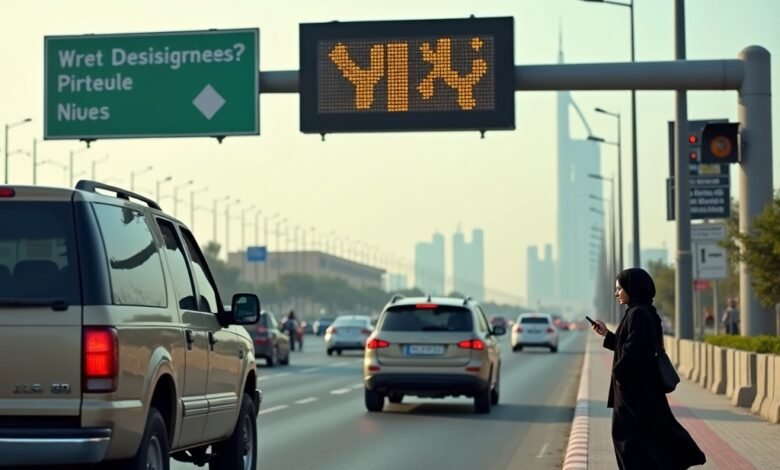
Dubai drivers face daily confusion with new electronic traffic signs that frequently malfunction, display incorrect information, and become unreadable in certain weather conditions. These signs, intended to improve traffic flow, are instead causing frustration, delays, and safety concerns for commuters across the emirate.
The Roads and Transport Authority (RTA) installed these digital signs to replace traditional traffic signals, promising better traffic management and real-time updates. However, residents report numerous technical issues that authorities have not publicly acknowledged.
Every day, thousands of Dubai residents encounter these problematic signs on major highways, residential streets, and critical intersections. The confusion caused by malfunctioning or unclear displays leads to sudden lane changes, wrong turns, and increased congestion.
This investigation reveals the specific problems with Dubai’s electronic traffic signs, identifies which areas are most affected, examines safety concerns, and provides residents with actionable steps to report issues they encounter.
What’s Wrong With Dubai’s New Electronic Traffic Signs?
Dubai’s new electronic traffic signs suffer from multiple technical failures that compromise their effectiveness and create safety hazards for drivers. These issues range from complete system failures to confusing displays that lead to poor decision-making on the road.
Specific problems include:
- Software bugs causing incorrect speed limit displays
- Power failures during peak hours
- Connectivity issues resulting in frozen or outdated information
- Inconsistent messaging between adjacent signs
- Poor placement that creates blind spots for drivers
Technical Malfunctions and Glitches
The electronic signs frequently experience technical malfunctions that render them unreliable. Software bugs cause displays to show incorrect speed limits, lane closures, or directional information. These errors can persist for hours before being detected and corrected.
Power failures are another common issue, with signs going completely dark during Dubai’s hottest hours when traffic is heaviest. Connectivity problems between signs and central control systems result in frozen displays showing outdated information from hours or even days earlier.
Visibility and Readability Challenges
The visibility of Dubai’s electronic traffic signs varies dramatically under different conditions. During bright daylight, many signs suffer from excessive glare that makes the text unreadable. At night, some signs are too dim, while others are excessively bright, creating visual discomfort for drivers.
Font size and color contrast issues plague numerous signs, particularly for drivers with visual impairments. The viewing angles are often poorly designed, with signs becoming completely unreadable when approached from certain directions. During sandstorms or heavy rain, many signs become completely obscured, defeating their purpose of providing real-time information.
Which Dubai Roads and Communities Are Most Affected?
Dubai’s electronic traffic sign problems are not evenly distributed across the emirate. Certain roads and communities experience significantly more issues than others, with major highways bearing the brunt of the problems due to higher traffic volumes and more complex signage requirements.
The most affected areas include Sheikh Zayed Road, particularly between the Dubai Mall and Dubai Marina exits, where multiple signs have experienced simultaneous failures during peak hours. Al Khail Road has also seen consistent issues with variable message signs displaying contradictory information, causing confusion for commuters.
Major Highways and Key Intersections
Sheikh Zayed Road, Dubai’s busiest highway, has experienced the most significant problems with electronic traffic signs. Between the Trade Centre Roundabout and the Financial Centre Road exit, multiple signs have displayed incorrect lane closure information, leading to sudden and dangerous lane changes by drivers.
Al Khail Road has seen consistent issues with variable message signs that show different speed limits to drivers in adjacent lanes. At the intersection with Mohammed Bin Zayed Road, signs have frequently displayed incorrect directional information, causing drivers to miss intended turns and creating congestion.
The Dubai-Abu Dhabi highway has experienced problems with signs that fail to update during accidents or construction, leaving drivers with outdated information that doesn’t reflect current road conditions.
Residential and Community Impact
In residential areas, the impact of problematic electronic signs is particularly felt during school hours. Near Dubai American Academy and GEMS Wellington International School, malfunctioning speed limit signs have created confusion for parents dropping off children, with some signs showing 60 km/h while adjacent displays indicate 40 km/h.
Communities in Dubai Marina and Jumeirah Lakes Towers (JLT) have reported issues with parking guidance signs that frequently display incorrect information about available spaces, leading to frustration and additional traffic as drivers circle looking for parking.
Areas with high populations of expatriates, such as Dubai Silicon Oasis and International City, have seen particular confusion with signs that sometimes display information in Arabic only, without the English translation that was promised during the rollout of the new system.
Safety Concerns and Potential Risks
Dubai’s malfunctioning electronic traffic signs pose significant safety risks to drivers, with confusing displays already contributing to near-misses and potentially serious accidents. The inconsistency of information has led to sudden maneuvers that endanger other road users, particularly during high-traffic periods when drivers have less time to react to changing conditions.
The safety risks extend beyond individual incidents to systemic issues that compromise overall traffic management in Dubai. When signs display incorrect speed limits, lane closure information, or directional guidance, drivers make decisions based on faulty data, creating a cascade of potentially dangerous situations that could result in multi-vehicle collisions or pedestrian injuries.
Driver Confusion and Decision Errors
Confusing signage has led to numerous dangerous situations on Dubai roads. Drivers encountering contradictory information between adjacent signs have been observed making sudden lane changes without proper signaling, creating hazards for vehicles in neighboring lanes.
At critical intersections, incorrect directional information has caused drivers to make illegal turns or miss intended exits, leading to panicked maneuvers that endanger other road users. Dubai Police has reported several near-misses at the intersection of Sheikh Zayed Road and Al Khail Road, where malfunctioning signs displayed incorrect lane guidance.
Speed limit confusion has also created safety concerns. When electronic signs display incorrect speed limits, some drivers accelerate to match the erroneous display, while others maintain their original speed, creating significant speed differentials that increase the risk of rear-end collisions.
Weather-Related Complications
Dubai’s extreme weather conditions exacerbate the problems with electronic traffic signs. During sandstorms, which occur frequently in the region, many signs become completely obscured by dust, rendering them useless when drivers need guidance most.
Heavy rain, while less common, causes additional issues with water accumulation on sign surfaces, making displays difficult to read. The high temperatures of Dubai summers also affect sign performance, with some displays becoming overly bright or experiencing color distortion that makes text illegible.
These weather-related complications create particularly dangerous situations when drivers must rely on malfunctioning signs during hazardous driving conditions. The combination of poor visibility and unreliable signage increases the risk of accidents during Dubai’s most challenging weather events.
Official Response: What Dubai’s RTA Is Saying (Or Not Saying)
The Roads and Transport Authority (RTA) has addressed concerns about the electronic traffic signs through limited public statements. While acknowledging some technical issues, RTA maintains that the signs are functioning as intended and provides few specifics about when problems will be fully resolved.
RTA’s communications have been characterized by technical explanations that downplay the severity of resident complaints. The authority has emphasized that the signs represent an upgrade from traditional signage, focusing on benefits rather than addressing the specific malfunctions reported by drivers. For more information about Dubai’s digital services initiatives, visit this article on Dubai Times.
RTA’s Public Position
In official statements, RTA has acknowledged “minor technical glitches” with the new electronic signs but maintains that the overall system is performing as designed. The authority has stated that these glitches are being addressed through regular maintenance schedules and software updates.
“The electronic traffic sign system is a significant upgrade to Dubai’s infrastructure,” said an RTA spokesperson in a recent communication. “While we are aware of some isolated issues, the majority of signs are functioning correctly and providing real-time traffic information to drivers.”
RTA has emphasized the benefits of the new system, including dynamic traffic management capabilities and the ability to update information rapidly during emergencies or special events. However, the authority has provided limited data to support claims of improved traffic flow or safety.
The Gap Between Official Statements and Resident Experiences
A significant disconnect exists between RTA’s official position and the experiences reported by Dubai residents. While RTA characterizes issues as “minor glitches” and “isolated incidents,” drivers report widespread problems affecting multiple signs across different areas of the emirate.
Residents have noted that RTA’s response to complaints often involves standard acknowledgments without specific timelines for resolution. When issues are addressed, they frequently reoccur shortly after, suggesting that the root causes of the problems have not been properly identified or fixed.
The authority has not provided detailed information about the frequency of malfunctions, the specific technical issues being experienced, or comprehensive data on how the signs have affected traffic flow and safety metrics. This lack of transparency has frustrated residents who rely on accurate traffic information for their daily commutes.
What Dubai Residents Can Do About Problematic Traffic Signs
Dubai residents can report problematic electronic traffic signs through multiple official channels to help authorities identify and address issues. By providing detailed information about specific problems, drivers contribute to the improvement of Dubai’s traffic management system and help ensure safer roads for everyone.
To effectively report issues, residents should:
- Use the RTA’s official app to submit reports with photos and exact locations
- Call the RTA customer service hotline at 8009090 for immediate reporting
- Submit detailed reports through the RTA website’s customer portal
- Document the issue thoroughly with photos, videos, and specific descriptions
Official Reporting Channels
The Roads and Transport Authority (RTA) provides several channels for residents to report problematic traffic signs. The most convenient method is through the RTA Dubai app, which allows users to submit reports with photos, videos, and precise location data.
For immediate reporting, residents can call the RTA customer service hotline at 8009090. This 24/7 service accepts reports of traffic sign malfunctions and other road issues. When calling, be prepared to provide the exact location of the problematic sign, the nature of the issue, and the time when it was observed.
The RTA website also features a dedicated customer portal where residents can submit detailed reports. This option allows for more comprehensive descriptions of issues and the ability to attach multiple supporting documents.
Documenting Issues Effectively
When reporting problematic electronic traffic signs, thorough documentation significantly increases the likelihood that issues will be addressed. Residents should take clear photos or videos showing the specific malfunction, with enough context to help authorities locate the sign.
Effective documentation includes:
- Close-up shots of the malfunctioning display
- Wide-angle photos showing the sign’s location and surrounding area
- Timestamps to indicate when the issue was observed
- Description of weather conditions at the time
- Notes on how the malfunction affected traffic flow or safety
Residents should maintain a record of their reports and follow up if issues are not addressed within a reasonable timeframe. Consistent reporting of the same problem helps demonstrate the severity and persistence of issues that require attention from authorities.
Comparing Old vs. New: Are the Electronic Signs Actually Improving Traffic Flow?
The introduction of electronic traffic signs in Dubai was intended to significantly improve traffic management and flow across the emirate. However, a comparison between the performance of the new system and the traditional signs it replaced reveals a more complex picture, with both benefits and persistent challenges.
Traditional traffic signs provided static information that was reliable but couldn’t adapt to changing conditions. The electronic signs were designed to offer dynamic updates, real-time traffic information, and the ability to quickly communicate changes during accidents or special events. However, the technical issues have undermined many of these intended improvements.
Intended Benefits vs. Real-World Performance
RTA promoted the electronic signs as a major upgrade that would reduce congestion by 15% and improve traffic flow during peak hours. The authority highlighted features such as variable speed limits, lane closure alerts, and real-time incident notifications as key benefits that would transform Dubai’s traffic management.
In practice, however, the signs have failed to deliver on many of these promises. During a recent three-month period when multiple electronic signs experienced simultaneous failures, traffic congestion on Sheikh Zayed Road increased by 8% compared to the same period the previous year, suggesting that the new system may have exacerbated rather than alleviated congestion.
The signs have shown some benefits in certain scenarios. During the Dubai Shopping Festival, when traffic patterns change significantly, the electronic signs successfully communicated temporary road closures and alternative routes. However, these successes have been inconsistent, with many signs failing to update during other major events.
Cost-Benefit Analysis: Are the Signs Worth It?
The electronic traffic sign system represents a significant investment for Dubai, with costs estimated at over AED 200 million for installation and approximately AED 30 million annually for maintenance and software updates. This substantial expenditure raises questions about whether the system delivers sufficient benefits to justify the expense.
Traditional traffic signs, while less flexible, had minimal maintenance costs and reliability rates exceeding 98%. The electronic signs, despite their advanced capabilities, have experienced failure rates estimated between 15-20% during peak usage periods, with each malfunction potentially causing delays and increased fuel consumption for thousands of vehicles.
A comprehensive cost-benefit analysis suggests that the current implementation of electronic signs may not represent the best use of Dubai’s transportation budget. The technical issues, high maintenance costs, and inconsistent performance raise questions about whether the investment could have been better allocated to other traffic improvement initiatives or to fixing the fundamental problems with the current electronic system.
FAQ: Dubai’s Electronic Traffic Signs
Dubai residents have numerous questions about the new electronic traffic signs, ranging from their purpose to the specific problems being experienced. Understanding these issues helps drivers navigate the challenges and contribute to improving the system.
The most frequently asked questions reveal concerns about reliability, safety, and the effectiveness of the new system compared to traditional traffic signage. These questions highlight the gap between the intended benefits and the actual performance of the electronic signs as experienced by daily commuters.
Common Questions About the Signs
Q: Why is Dubai replacing traditional traffic signs with electronic ones?
The Roads and Transport Authority (RTA) claims electronic signs offer better traffic management capabilities, real-time updates, and improved communication during emergencies or special events. The authority positions them as a necessary upgrade to Dubai’s traffic infrastructure.
Q: What specific problems are Dubai residents experiencing with the new electronic signs?
Residents report technical malfunctions, poor visibility in certain conditions, confusing displays, and weather-related issues. Specific problems include incorrect speed limit displays, power failures during peak hours, and signs that become unreadable during sandstorms or heavy rain.
Q: How can I report a problematic electronic traffic sign in Dubai?
Residents can report issues through the RTA app by selecting “Report Traffic Issue,” calling the RTA customer service hotline at 8009090, or submitting a detailed report through the RTA website. When reporting, include the exact location, description of the problem, and photos if possible.
Q: Are the electronic traffic signs causing more accidents in Dubai?
Safety concerns exist due to driver confusion from malfunctioning or unclear signs. While specific accident statistics directly attributed to electronic signs are not publicly available, Dubai Police has reported several near-misses linked to confusing signage that could potentially lead to accidents.
Q: When will Dubai fix the problems with its electronic traffic signs?
No official timeline has been provided for comprehensive fixes to the electronic traffic sign system. RTA has acknowledged some issues are being addressed through regular maintenance, but residents should report problems they encounter to help authorities prioritize repairs.
What Residents Should Know
Dubai’s electronic traffic signs, intended to improve traffic management, have instead created significant challenges for residents across the emirate. The technical malfunctions, visibility issues, and confusing displays have led to frustration, delays, and safety concerns that authorities have been slow to address.
The problems affect major highways, residential areas, and critical intersections, with Sheikh Zayed Road and Al Khail Road experiencing the most significant issues. These malfunctions have contributed to driver confusion, sudden lane changes, and increased congestion, creating potential safety hazards for all road users.
While the Roads and Transport Authority has acknowledged some technical issues, there remains a significant gap between official statements and resident experiences. The authority has provided limited information about when comprehensive fixes will be implemented or how the system’s reliability will be improved.
Dubai residents play a crucial role in identifying and reporting problematic signs through official channels. By documenting issues thoroughly and consistently reporting malfunctions, drivers contribute to the improvement of the system and help ensure safer roads for everyone.
Dubai Times will continue to follow this story and provide updates on Dubai’s traffic infrastructure developments. Residents are encouraged to share their experiences with electronic traffic signs and to stay informed about improvements and changes to the system.