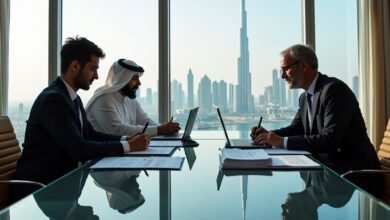
Dubai’s Co-Working Space Industry Is Collapsing – Or Is It Transforming?


Headlines this year paint conflicting pictures of Dubai’s co-working space sector: some outlets report closures and contract defaults, while others celebrate the launch of tech-enabled hybrid hubs and sustainability-focused collaborative spaces. Dubai remains a global business hub attracting entrepreneurs, multinationals, and investors from across the Gulf and beyond, making the health of its flexible office market a critical indicator for the broader UAE economy. This analysis examines the current state of the co-working industry in 2026, weighing evidence for both the collapse and transformation narratives, and exploring what these trends mean for businesses and investors operating in the UAE.
The Current State of Dubai’s Co-Working Space Market
Dubai’s co-working sector entered 2026 with approximately 320 registered flexible office providers, ranging from global brands to boutique local operators, spread across free zones, business districts, and residential neighborhoods. The market recovered from pandemic-era occupancy lows but now faces a new phase shaped by hybrid work models, rising operational costs, and evolving tenant expectations. Major players include WeWork, Regus (IWG Group), Servcorp, and homegrown brands like Astrolabs and The Bureau. Recent data from Dubai Economy show that while new licenses for flexible workspace operators increased by 11 percent year on year in the first half of 2026, several mid-sized operators quietly exited the market or consolidated locations.
Key Players and Market Dynamics in 2026
- WeWork operates 18 locations across Dubai, focusing on enterprise clients and long-term agreements to stabilize revenue after global restructuring.
- Regus (IWG) maintains the largest footprint with over 30 centers, emphasizing suburban and neighborhood hubs to capture demand from remote professionals.
- Servcorp targets premium corporate clients in landmark towers, charging AED 150 to AED 300 per square foot annually for serviced offices.
- Local operators like Astrolabs and The Bureau specialize in tech startups and creative agencies, offering community programming, mentorship, and investor networking.
- New entrants in 2026 include proptech startups backed by DIFC Innovation Hub, deploying AI-driven space management and on-demand booking platforms.
- Global trends such as ESG compliance, wellness amenities, and hybrid work technology are reshaping tenant requirements and operator business models.
Signs of Strain: Why Some Say the Industry Is Collapsing
- Oversupply of flexible office space in key districts like Business Bay and DIFC has driven occupancy rates down to 72 percent in Q1 2026, compared to 84 percent in late 2024.
- Rising operational costs, including utility tariffs, property management fees, and labor expenses, squeezed profit margins for smaller operators without corporate backing.
- Post-pandemic shifts to remote and hybrid work reduced demand for full-time desk rentals, with monthly membership revenue per seat declining by 18 percent since 2024.
- At least seven mid-sized co-working brands closed locations or filed for insolvency between January 2025 and March 2026, citing unsustainable lease commitments.
- Corporate tenants renegotiated contracts or moved to in-house hybrid models, cutting long-term agreements that once provided stable cash flow for operators.
- Competition from landlords offering direct flexible lease terms and short-term agreements bypassed co-working intermediaries, eroding market share.
- The secondary property market reforms introduced greater liquidity for real estate investors but also intensified competition for commercial tenants.
Transformation in Motion: How Co-Working Is Evolving
Dubai’s co-working sector is not simply shrinking but adapting to new market realities through innovation and specialization. Hybrid workspace models now blend private offices, hot desks, and virtual memberships, allowing operators to serve diverse client segments and optimize space utilization. Niche co-working hubs targeting specific industries such as fintech, media production, and healthcare tech emerged across DIFC, Dubai Media City, and Dubai Healthcare City, offering sector-specific compliance support, networking, and equipment.
Corporate partnerships have become a revenue pillar: multinational firms contract entire floors for rotating teams, combining cost savings with flexibility. Technology integration accelerated in 2026, with operators deploying IoT sensors for occupancy tracking, AI-powered booking systems, and contactless access controls. Sustainability initiatives gained traction as operators pursued green building certifications and net-zero commitments aligned with UAE Vision 2021 and the Dubai 2040 Urban Master Plan.
- Community-focused spaces host workshops, pitch events, and industry meetups, creating non-rental revenue streams and increasing member retention.
- Operators collaborate with government accelerators and free zone authorities to offer subsidized desks for startups and SMEs under economic diversification programs.
Innovation and Adaptation Strategies
On-demand workspace apps allow users to book desks, meeting rooms, or private offices by the hour across multiple locations, mirroring the flexibility consumers expect from ride-hailing and hospitality platforms. Wellness amenities such as ergonomic furniture, air quality monitoring, fitness rooms, and mental health support programs became standard differentiators for premium operators competing on experience rather than price alone.
Events programming transformed from occasional networking mixers into structured series of industry panels, skills training, and investor showcases, often co-organized with DIFC Innovation Hub, ADGM Registration Authority, or Dubai Future Foundation. Proptech startups supported by these regulators are deploying blockchain-based access systems, predictive maintenance software, and data analytics dashboards that help operators forecast demand and adjust pricing dynamically.
Market Data and Trends: A 2026 Snapshot
| Metric | 2024 | 2025 | 2026 (Q1) |
|---|---|---|---|
| Average Occupancy Rate | 84% | 78% | 72% |
| Average Rental (AED per sq ft per year) | 185 | 178 | 172 |
| Number of Active Operators | 302 | 318 | 320 |
| New Licenses Issued (H1) | 42 | 46 | 51 |
| Operator Closures/Consolidations (YTD) | 9 | 14 | 7 |
| Corporate Contract Share of Revenue | 48% | 53% | 58% |
Data sourced from CBRE Middle East Q1 2026 report, JLL Dubai Office Market Overview, and Dubai Economy licensing statistics. Occupancy decline reflects oversupply and hybrid work adoption, while the rise in corporate contracts signals operator pivot toward stable, large-scale clients. New licenses continue despite closures, indicating market consolidation rather than wholesale exit.
Expert Analysis: Voices from Dubai’s Business Community
Advisers at DIFC-regulated commercial real estate firms report that institutional investors remain cautiously optimistic about Dubai’s flexible workspace sector, viewing current volatility as a natural correction following rapid pandemic-era expansion. Analysts at UAE Central Bank-licensed financial advisory groups note that operators with diversified revenue streams, technology platforms, and corporate partnerships are best positioned to weather margin pressures and occupancy fluctuations.
Representatives from Dubai Land Department observe that landlords increasingly offer flexible lease terms directly to tenants, a trend that could either erode co-working market share or push operators to specialize in high-value services like compliance support, community management, and technology infrastructure. Startup founders in Dubai Internet City and Dubai Silicon Oasis emphasize that co-working spaces remain essential for early-stage companies needing low-commitment office solutions, networking opportunities, and credibility when pitching investors.
Disclaimer and Expert Review
This article is based on journalistic research, publicly available market data, and expert commentary from UAE business and regulatory sources. It is intended for informational purposes only and does not constitute financial, investment, or legal advice. Readers considering investments in Dubai’s real estate or co-working sectors should consult licensed advisors familiar with UAE regulations and market conditions. Dubai Times maintains strict editorial standards to ensure accuracy and credibility, adhering to journalistic best practices and sourcing from reputable institutions including Dubai Economy, CBRE, JLL, and UAE regulatory bodies.
Impact on UAE Businesses and Investors
For startups seeking flexible office solutions, the current market offers opportunities to negotiate lower rental rates and secure favorable terms as operators compete for occupancy. SMEs evaluating cost structures may find hybrid memberships or on-demand desk access more economical than traditional leases, particularly if teams work remotely part-time. Corporate tenants benefit from increased operator willingness to customize spaces, extend contract flexibility, and bundle services such as IT support, reception staffing, and event hosting.
Real estate investors face mixed signals: oversupply and occupancy declines suggest caution, yet consolidation among stronger operators and the rise of proptech-enabled platforms indicate long-term potential for those backing adaptive business models. The transformation narrative holds that Dubai’s co-working sector will stabilize at a smaller, more specialized scale, serving niche markets and corporate clients rather than competing on mass-market hot desks.
- Risks include further operator exits, lease defaults, and potential downward pressure on commercial property valuations in oversupplied districts.
- Opportunities emerge in proptech investment, acquisition of distressed co-working portfolios, and partnerships with government-backed startup accelerators.
Opportunities for Entrepreneurs and Investors
- Emerging niches such as healthcare-compliant workspaces for telemedicine startups, FinTech hubs with built-in regulatory advisory, and creative production studios for media entrepreneurs.
- Investment in proptech platforms that provide booking software, space management analytics, and membership management tools to co-working operators across the Gulf.
- Government incentives under UAE economic diversification plans, including subsidized licenses for startups, R&D grants, and accelerator programs co-located in co-working spaces.
- Partnerships with free zone authorities in DIFC, ADGM, and Dubai Silicon Oasis to develop specialized hubs aligned with national innovation priorities.
- Acquisition opportunities as distressed operators seek buyers or strategic partners to stabilize operations and access capital for technology upgrades.
Regulatory and Economic Context
UAE regulations governing co-working spaces fall under the jurisdiction of Dubai Economy (formerly DED), which issues commercial licenses and monitors compliance with zoning, safety, and employment laws. Free zones such as DIFC and ADGM operate under separate regulatory frameworks, offering streamlined licensing, tax incentives, and access to international legal systems that attract multinational operators and premium tenants. In 2026, Dubai Land Department introduced new transparency requirements for commercial lease disclosures, aiming to protect tenants and investors from hidden fees and contract ambiguities.
Broader economic factors influencing the co-working sector include oil price stability, which supports government spending and private sector confidence, and tourism recovery, which drives short-term demand for meeting rooms and event spaces from visiting business delegations. Dubai’s business-friendly initiatives, such as 10-year golden visas for entrepreneurs and investors, remote work visas, and startup support programs, continue to attract international talent and capital, sustaining baseline demand for flexible office solutions. The rise of Dubai as a global technology business hub has also increased demand for specialized workspaces catering to tech entrepreneurs and digital nomads.
Frequently Asked Questions
Is Dubai co-working space market growing in 2026?
Dubai’s co-working market shows mixed growth in 2026, with new operator licenses increasing by 11 percent year on year but occupancy rates declining to 72 percent due to oversupply and hybrid work adoption. The sector is consolidating around stronger operators with corporate partnerships and technology platforms, indicating transformation rather than collapse. Revenue growth comes increasingly from long-term corporate contracts and niche specialization rather than mass-market desk rentals.
What are the best co-working spaces in Dubai for startups?
Top co-working spaces for startups in Dubai include Astrolabs in Dubai Internet City, offering tech-focused community programming and investor networking. The Bureau in DIFC provides compliance advisory and fintech mentorship. Impact Hub Dubai specializes in social enterprises and sustainability-focused ventures. WeWork and Regus offer extensive networks and corporate credibility. Free zone operators in Dubai Silicon Oasis and Dubai Knowledge Park provide subsidized rates and government accelerator access for early-stage companies.
How has remote work affected Dubai office real estate?
Remote work adoption post-pandemic reduced demand for traditional long-term office leases, driving occupancy declines and rental rate pressure across Dubai’s commercial real estate market. However, it also accelerated demand for hybrid workspace solutions, on-demand meeting rooms, and flexible memberships that allow companies to scale office usage dynamically. Co-working operators adapted by offering modular contracts, technology-enabled booking systems, and wellness amenities that support distributed teams when they gather in person.
Are co-working spaces a good investment in UAE?
Co-working spaces in the UAE present both risks and opportunities for investors in 2026. Risks include oversupply, occupancy volatility, and operator exits due to margin pressure. Opportunities arise from market consolidation, proptech innovation, and growing corporate demand for flexible office solutions. Experts advise focusing on operators with diversified revenue streams, technology platforms, and partnerships with government accelerators or free zone authorities. Due diligence should include lease structure analysis, occupancy trends, and regulatory compliance review.
What government policies support co-working spaces in Dubai?
UAE government policies supporting co-working spaces include streamlined licensing through Dubai Economy and free zone authorities, subsidized startup programs in DIFC Innovation Hub and ADGM, and remote work visa schemes that attract international entrepreneurs. Dubai 2040 Urban Master Plan prioritizes mixed-use developments and innovation districts, creating demand for flexible workspaces. UAE Vision 2021 economic diversification goals encourage proptech investment and entrepreneurship support, benefiting co-working operators aligned with national priorities.
Final Thoughts
Dubai’s co-working space industry faces genuine challenges in 2026, including oversupply, occupancy declines, and margin pressure from rising costs and hybrid work adoption. However, the evidence points toward transformation rather than collapse. Operators are adapting through specialization, technology integration, corporate partnerships, and alignment with UAE economic diversification goals. The market is consolidating around stronger players who deliver high-value services, niche community programming, and flexible contracts that meet the evolving needs of startups, SMEs, and multinational tenants.
For businesses and investors in the UAE, the sector offers both caution and opportunity: careful due diligence is essential, but those backing innovative operators or investing in proptech platforms may benefit from Dubai’s adaptive business environment and long-term growth trajectory. As the market stabilizes, Dubai’s co-working sector is likely to emerge leaner, more specialized, and better aligned with the hybrid work models and entrepreneurial ecosystems shaping the future of business in the Gulf.
Stay informed on the latest developments in Dubai’s real estate, business, and investment landscape by following Dubai Times for comprehensive coverage of UAE market trends, regulatory updates, and economic analysis.