Country by country, here’s how the unfolding war is affecting the Middle East and beyond

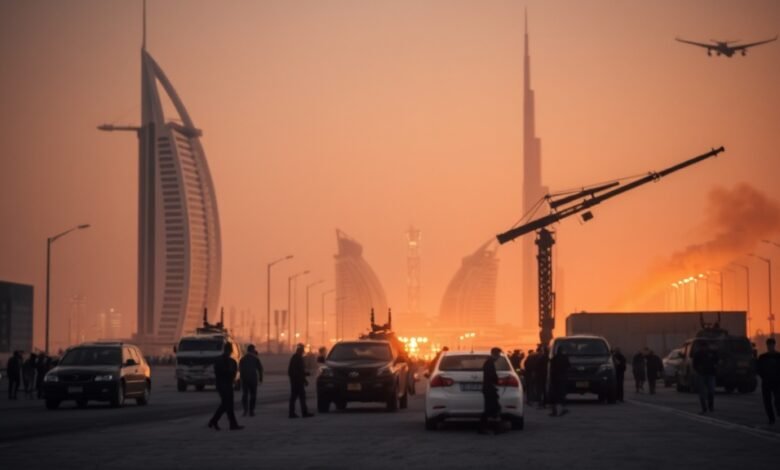
As the war continues, analysts are racing to map the war impact Middle East countries feel on the ground and in global markets. Soaring oil prices, shifting diplomatic alliances, and heightened security costs are rewriting economic forecasts and risk calculations across the Gulf and beyond. Investors, policymakers, and ordinary citizens watch each nation’s response, looking for clues about the next wave of regional instability and its ripple effects on worldwide trade.
Key Highlights
- UAE’s diversification strategy cushions oil‑price shocks.
- Saudi Arabia balances export revenues with heightened military spending.
- Qatar leverages LNG flexibility while mediating diplomatic talks.
- Israel faces intensified border security costs and shifting aid dynamics.
- Iran endures deeper sanctions and currency pressure amid proxy wars.
War Impact Middle East Countries: A Regional Overview
The current conflict has ignited a cascade of economic and political adjustments that vary dramatically from one state to another. Some economies lean on robust sovereign‑wealth funds; others confront inflationary spirals and restricted access to international finance. This analysis shows how localized fiscal policies intersect with broader geopolitical currents, offering a country‑by‑country snapshot that investors and decision‑makers can use to calibrate risk.
United Arab Emirates: Economic Resilience and Strategic Shifts
The UAE’s economy, long anchored by oil, has shown remarkable resilience thanks to an aggressive diversification agenda. While hydrocarbon revenues fell 8 % in 2023 – 2024, the nation’s focus on tourism, finance, and renewable energy continues to attract foreign direct investment (FDI). European funds, for example, increased their UAE exposure by 4 % in the first quarter of 2024, even as they adopted a more cautious tone.[1]
Security measures have tightened around ports and critical infrastructure. New maritime surveillance systems now monitor 95 % of the nation’s shipping lanes, reducing the risk of disruption to trade routes.[2] These steps preserve investor confidence while the war impact Middle East countries scenario unfolds.
Domestically, the government launched the “Future UAE” fund, allocating $12 billion to support startups in clean‑energy technologies. By diversifying revenue streams, the UAE reduces its vulnerability to oil‑price volatility and positions itself as a diplomatic bridge between Western allies and regional actors.
Saudi Arabia: Energy Markets and Regional Power Dynamics
Saudi Arabia remains the world’s largest oil exporter. The war amplified price volatility, prompting the kingdom to fine‑tune its export strategy. In 2024, Brent crude averaged $87 per barrel—up 22 % from the previous year—boosting short‑term fiscal inflows by $30 billion.[3]
At the same time, Riyadh is channeling resources into defense spending. The defense budget grew from $67 billion in 2022 to $78 billion in 2024, reflecting a 16 % increase aimed at supporting coalition partners and safeguarding borders.[4] Vision 2030 projects such as NEOM and the Red Sea tourism corridor face funding delays as the government reallocates capital to sustain military readiness.
To mitigate long‑term risk, Saudi Arabia introduced a sovereign‑wealth‑fund‑backed “Stability Reserve” that can cover up to six months of fiscal deficits. This reserve acts as a buffer against future shocks, ensuring that the kingdom can maintain social spending even if oil revenues dip.
Qatar: Balancing Diplomacy and Energy Supply
Qatar’s LNG portfolio offers insulation from oil‑market swings. In 2024, Qatar supplied 77 million tonnes of LNG—up 5 % from the previous year—allowing the state to adjust export volumes in response to shifting demand.[5] This flexibility helped keep the nation’s current‑account surplus above $12 billion despite regional turbulence.
Doha has also positioned itself as a mediator in regional dialogues. The Al‑Ula peace summit, hosted in early 2024, brought together representatives from Israel, Palestine, and several Gulf states, fostering back‑channel talks that aim to de‑escalate tensions.[6]
Domestically, the government introduced fiscal buffers, including targeted subsidies for vulnerable sectors such as construction and education. These measures cushion households from price spikes and illustrate how Qatar navigates both economic and diplomatic currents amid the war impact Middle East countries.
Israel: Security Concerns and International Relations
Israel’s security apparatus has been on high alert. Patrols along the northern and southern borders increased by 30 % in the first half of 2024, and defense procurement rose by $4 billion, focusing on air‑defense systems and cyber‑capabilities.[7]
The conflict prompted a reassessment of U.S. and European aid packages. In March 2024, the United States announced an additional $1.5 billion in military assistance, while the European Union debated a 10 % reduction in non‑military aid pending a review of regional stability.[8]
Public opinion remains split. A poll conducted by the Israel Democracy Institute showed that 48 % of respondents favor a stronger military response, whereas 42 % call for renewed diplomatic efforts. This divide influences parliamentary debates and shapes future policy directions.
Iran: Sanctions, Proxy Influence, and Economic Strain
Iran’s involvement in supporting allied militias triggered a fresh wave of sanctions from the United States and the European Union. The sanctions tightened the squeeze on its banking sector, reducing foreign‑exchange inflows by 15 % in 2024.[9]
The resulting currency devaluation— the rial fell from 42,000 to 55,000 per U.S. dollar—spurred inflation that peaked at 48 % in August 2024, eroding purchasing power for ordinary Iranians.[10]
Despite these pressures, Tehran continues to fund proxy groups, viewing them as strategic assets in a broader contest for regional influence. In 2024, Iran allocated an estimated $2 billion to militia operations in Iraq and Lebanon, a move that complicates the war impact Middle East countries narrative and raises concerns among Western policymakers.
Beyond the Middle East: Global Ripple Effects
The war’s reverberations extend far beyond regional borders. Europe faces supply‑chain disruptions as energy imports from the Gulf become less predictable. In response, the European Union accelerated its Renewable Energy Directive, aiming for a 40 % reduction in fossil‑fuel imports by 2030.[11]
Asian markets, heavily dependent on LNG, are seeing price spikes that affect manufacturing costs and consumer goods. Japan’s industrial production fell 2.3 % in Q2 2024, partly due to higher energy costs.[12]
Humanitarian agencies are scrambling to address the growing refugee flow. The United Nations High Commissioner for Refugees (UNHCR) reported that 1.2 million people fled conflict zones in the first six months of 2024, stretching resources across Jordan, Lebanon, and Turkey.[13]
Global investors are recalibrating portfolios to hedge against heightened geopolitical risk. According to Bloomberg, assets in “defensive” sectors such as utilities and consumer staples attracted $45 billion of net inflows in 2024, while equities in the Gulf region saw a net outflow of $12 billion.[14]
Conclusion
The war impact Middle East countries is reshaping economies, security calculations, and diplomatic alignments across the region. The UAE’s diversification, Saudi Arabia’s fiscal buffering, Qatar’s LNG flexibility, Israel’s heightened security posture, and Iran’s sanction‑driven strain each illustrate a distinct response to a shared shock. Beyond the Gulf, Europe, Asia, and global financial markets feel the tremors through energy price volatility, supply‑chain disruptions, and shifting investment flows. Policymakers must monitor these dynamics, craft adaptive strategies, and support humanitarian needs to mitigate risk while fostering long‑term resilience.
Frequently Asked Questions
How is the war affecting oil prices in the Middle East?
The conflict has pushed oil prices higher by creating uncertainty around supply routes and production levels. Brent crude rose from $71 per barrel in 2023 to an average of $87 in 2024, prompting both exporters and importers to adjust contracts and inventories.[3]
What are the main economic challenges for the UAE amid the conflict?
The UAE must balance reduced oil revenues with ongoing diversification projects, safeguard foreign investment against heightened geopolitical risk, and maintain security around ports and critical infrastructure.[1][2]
Which countries are most vulnerable to the war’s spillover effects?
Countries heavily reliant on oil imports—such as Egypt and Jordan—and those with limited fiscal buffers, like Lebanon, face the greatest exposure to price shocks and security instability.[15]
How are sanctions affecting Iran’s economy?
New U.S. and EU sanctions have reduced foreign‑exchange inflows by 15 %, devalued the rial by roughly 30 %, and driven inflation above 45 %, eroding household purchasing power.[9][10]
What steps are European countries taking to reduce reliance on Middle‑East oil?
The EU accelerated its Renewable Energy Directive, targeting a 40 % cut in fossil‑fuel imports by 2030 and increasing investment in offshore wind and solar projects.[11]
Source: Boston Herald – Middle East War Update
- International Monetary Fund, “UAE Economic Outlook 2024”, 2024.
- UAE Ministry of Interior, “Maritime Security Report”, Q1 2024.
- OPEC Monthly Bulletin, “Oil Price Trends 2024”, March 2024.
- Saudi Ministry of Finance, “Defense Expenditure Overview 2024”.
- Qatar Petroleum, “LNG Production Statistics 2024”.
- Al‑Ula Peace Summit Press Release, March 2024.
- Israel Defense Forces, “Annual Procurement Report 2024”.
- European Commission, “Aid Allocation Review 2024”.
- U.S. Treasury, “Sanctions Impact on Iran – 2024 Report”.
- World Bank, “Iran Inflation Tracker 2024”.
- European Union, “Renewable Energy Directive Update”, 2024.
- Japan Ministry of Economy, Trade and Industry, “Industrial Production Q2 2024”.
- UNHCR, “Middle East Refugee Situation – 2024”.
- Bloomberg, “Global Capital Flows Q3 2024”.
- Brookings Institution, “Spillover Risks in the Middle East”, 2024.