

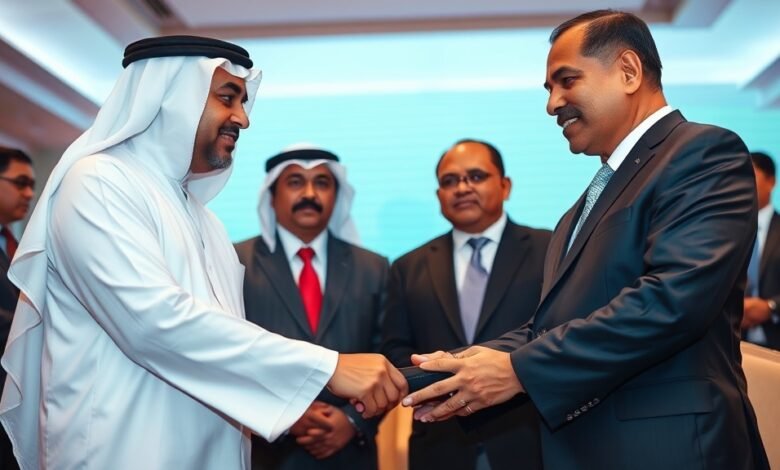
Indonesia’s defence minister Prabowo Subianto and United Arab Emirates Crown Prince Sheikh Mohamed bin Zayed Al Nahyan (MBZ) concluded a landmark meeting in Abu Dhabi that many analysts are dubbing the Prabowo MBZ strategic partnership. The two leaders signed a suite of agreements that deepen Indonesia‑UAE relations across trade, defence, energy and technology, signalling a shift in Gulf‑Asia dynamics. Observers say the pact could open new economic corridors linking the Gulf’s capital markets with Southeast Asia’s burgeoning consumer base, while also recalibrating the strategic balance in the Indo‑Pacific. As the first high‑level dialogue of its kind, the summit underscores a growing appetite for cooperation between the Middle East and Indonesia.
Prabowo MBZ strategic partnership
Key Highlights
- Signing of MoUs on trade, defence and renewable energy in Abu Dhabi.
- Commitment to boost UAE investment in Indonesia by 20 % over the next five years.
- Launch of joint maritime security patrols in the Indian Ocean.
- Establishment of a bilateral technology fund targeting fintech and clean‑tech startups.
- Agreement to hold annual diplomatic summits rotating between Jakarta and Dubai.
Background of Indonesia-UAE Relations
Diplomatic ties between Indonesia and the United Arab Emirates date back to the early 1970s, when both nations joined the Non‑Aligned Movement. Over the decades, the partnership has expanded beyond political solidarity to include robust trade in commodities such as palm oil, textiles and petrochemicals. Cultural exchanges—highlighted by Indonesian festivals in Abu Dhabi and Emirati art exhibitions in Jakarta—have fostered people‑to‑people connections. Recent visits by senior leaders, including President Joko Widodo’s 2019 state trip to Dubai, have cemented a foundation of mutual respect that set the stage for the Prabowo MBZ strategic partnership.
Key Agreements Signed in Abu Dhabi
The Abu Dhabi summit produced four memoranda of understanding (MoUs) covering trade liberalisation, defence cooperation, renewable energy and digital innovation. The trade MoU aims to streamline customs procedures and reduce tariffs on high‑value goods, while the defence protocol outlines joint military exercises and the sharing of intelligence on terrorism. Energy agreements focus on solar‑power projects in Indonesia’s eastern provinces and the development of green hydrogen for export to Gulf markets. Finally, a digital‑tech MoU creates a joint fund to nurture fintech startups, positioning the UAE as a gateway for Indonesian innovators seeking Middle‑East capital.
Economic Implications for Both Nations
Economists anticipate that the new framework will lift bilateral trade volumes by double‑digit percentages within the next decade. The UAE’s sovereign wealth funds are poised to increase their stakes in Indonesian infrastructure, hospitality and logistics, aligning with Indonesia’s ambition to become a regional hub. For the Gulf, access to Indonesia’s youthful workforce and growing consumer market offers diversification away from oil‑centric revenues. The partnership is expected to generate thousands of jobs in both countries, particularly in construction, renewable‑energy installations and high‑tech services.
Defense and Security Collaboration
Joint military drills scheduled for 2025 will involve naval vessels from both navies, focusing on anti‑piracy and maritime domain awareness in the Indian Ocean. Counter‑terrorism coordination will be enhanced through shared intelligence platforms, building on existing cooperation against extremist networks in Southeast Asia. The two sides also agreed to establish a bilateral security council to oversee maritime patrols, cyber‑defence initiatives and the protection of critical infrastructure, reinforcing a broader Middle East‑Indonesia cooperation agenda.
Investment Opportunities in Emerging Sectors
Beyond traditional industries, the partnership opens doors for UAE capital in Indonesia’s fast‑growing technology ecosystem. The bilateral fund will target fintech platforms that facilitate cross‑border payments, as well as blockchain solutions for supply‑chain transparency. Renewable‑energy projects—particularly large‑scale solar farms and hydrogen‑production facilities—are slated for joint development, aligning with both nations’ net‑zero commitments. In tourism, Emirati hotel groups will explore new resorts on Indonesia’s lesser‑known islands, leveraging the UAE’s expertise in luxury hospitality to attract high‑spending travellers.
Regional Geopolitical Impact
The Prabowo MBZ strategic partnership reshapes the geopolitical landscape by linking Gulf capital with Southeast Asian markets, creating a new axis of cooperation that challenges traditional alignments. Gulf‑Southeast Asia alliances are tightening, prompting reactions from China, Japan and Australia, all of whom monitor the evolving balance in the Indo‑Pacific. Neighboring countries such as Saudi Arabia and Qatar have expressed interest in replicating similar frameworks, while India views the development as a complementary element to its own “Act East” policy. Overall, the alliance contributes to a more multipolar regional order, offering Indonesia a broader set of strategic options.
Future Outlook and Next Steps
Both governments have scheduled a follow‑up summit in Dubai for late 2026 to review implementation progress and set new targets. Long‑term cooperation frameworks will include a joint economic council, a defence liaison office in Jakarta, and a renewable‑energy task force. Potential challenges—such as regulatory harmonisation, cultural differences and market volatility—will be addressed through a series of bilateral working groups. If managed effectively, the partnership could become a template for Gulf‑Asia collaboration, driving sustainable growth and security across the region.
Frequently Asked Questions
What were the main outcomes of the Prabowo‑MBZ meeting in Abu Dhabi?
The leaders signed MoUs on trade liberalisation, defence cooperation, renewable‑energy projects and a joint technology fund, laying the groundwork for deeper Indonesia‑UAE collaboration.
How will the new Indonesia‑UAE partnership affect trade between the two countries?
It is expected to boost bilateral trade by double‑digit percentages, streamline customs procedures, and attract increased UAE investment in Indonesian infrastructure and services.
What security initiatives are expected from the strengthened ties?
Joint naval exercises, coordinated counter‑terrorism intelligence sharing, and a bilateral security council to oversee maritime patrols and cyber‑defence efforts.
The Prabowo MBZ strategic partnership marks a decisive step toward a more integrated Gulf‑Asia economic corridor, promising mutual prosperity and a balanced strategic environment in the Indo‑Pacific. As the two nations move from agreement to action, the world will watch how this alliance reshapes trade routes, security frameworks and investment flows across continents.
Source: Antara News