
Philips positions AI‑driven digital health at Dubai’s World Healthcare Expo, reshaping Gulf medical markets

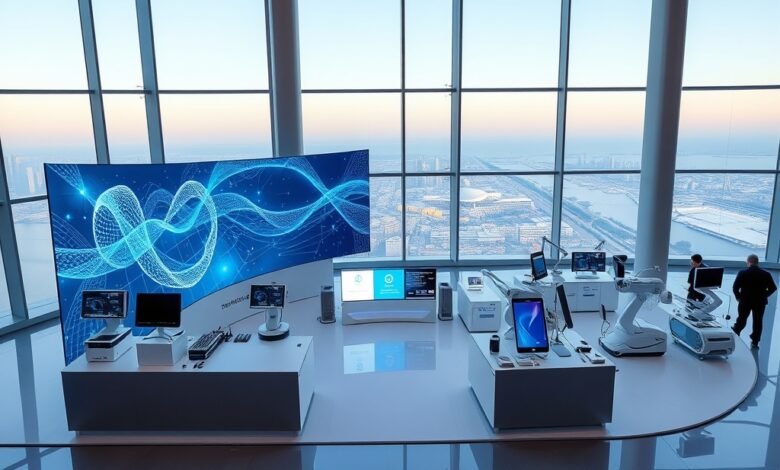
Why the WHX showcase marks a strategic inflection point for Philips in the Middle East
Scale of the regional health‑tech opportunity
The World Healthcare Expo (WHX) in Dubai assembled the Gulf’s leading hospital groups, insurers and technology partners under one roof, providing Philips with a concentrated audience that mirrors the region’s fastest‑growing healthcare spend. By unveiling a portfolio of AI‑enabled imaging, patient‑monitoring and data‑analytics solutions, Philips is targeting a market where demand for cost‑effective, high‑throughput care is outpacing the capacity of existing infrastructure. The exposure at WHX converts abstract regional growth trends into concrete sales pipelines, accelerating contract negotiations that would otherwise unfold over years.
Alignment with government digital‑health roadmaps
UAE ministries and health authorities have published multi‑year digital‑transformation plans that prioritize interoperable data platforms, predictive analytics and remote‑care services. Philips’ AI suite directly maps onto these policy pillars, positioning the company as a preferred vendor for public‑sector tenders. The timing of the WHX debut—coinciding with the rollout of the nation’s “Smart Health” initiatives—means that procurement cycles are likely to favour suppliers that can demonstrate ready‑to‑deploy, regulator‑compliant AI tools.
Implications for healthcare providers and clinical operations
From workflow bottlenecks to AI‑enabled efficiency
Hospitals across the GCC report chronic staffing shortages and rising imaging volumes. Philips’ AI‑driven triage engines can automatically flag critical cases, reallocating radiologist time to high‑value interpretation. This shift from manual queue management to algorithmic prioritisation reduces patient wait times and improves bed turnover, directly impacting operating margins. Clinics that adopt the AI‑augmented workflow stand to lower per‑procedure costs while maintaining—or improving—clinical quality.
Diagnostic accuracy and chronic‑disease management
Chronic conditions such as diabetes and cardiovascular disease dominate regional morbidity profiles. Philips’ predictive analytics platform ingests real‑time vitals, imaging data and electronic health records to generate risk scores that guide early intervention. For providers, the ability to move from reactive to proactive care translates into reduced readmission rates and a stronger case for value‑based reimbursement models that are increasingly being piloted in the Gulf.
Investor and market ramifications
Potential revenue streams and partnership models
Each AI module presented at WHX is structured as a subscription‑based service, creating recurring‑revenue streams that are attractive to growth‑oriented investors. Philips also announced a partner‑ecosystem framework, inviting local system integrators to co‑sell and customize solutions. This model spreads implementation risk, accelerates market penetration, and generates ancillary revenue through training, maintenance and data‑hosting contracts.
Competitive positioning against global and regional rivals
By foregrounding AI at a flagship regional expo, Philips differentiates itself from competitors that rely on legacy hardware sales. The move forces rivals—both multinational OEMs and emerging Middle‑East startups—to accelerate their own AI roadmaps or risk losing market share in high‑growth contracts. Investors monitoring the health‑tech sector will likely re‑weight exposure toward firms that can demonstrate a full stack of hardware, software and data services, a category in which Philips now has a clear foothold.
Broader economic impact on the UAE’s diversification agenda
Smart‑health ecosystem as a pillar of the Knowledge‑Based Economy
The UAE’s Vision 2021 and subsequent “Strategic Plan for the Health Sector” envision health‑tech as a catalyst for a knowledge‑driven economy. Philips’ AI rollout contributes to this vision by creating high‑skill jobs in data science, software integration and clinical informatics, while also reducing the fiscal burden of imported specialist services. The ripple effect strengthens the UAE’s positioning as a regional hub for medical innovation.
Capital flows, venture activity and supply‑chain localisation
Successful deployment of Philips AI solutions is expected to attract venture capital into adjacent start‑ups that specialize in health‑data security, edge‑computing hardware and localized AI model training. Moreover, Philips’ commitment to co‑development with Gulf partners encourages localisation of the supply chain, shifting a portion of the value chain from Europe to the Middle East and generating measurable GDP contribution.