Dubai’s Digital Dubai Platform Turns GITEX Into a Government‑Tech Deal‑Making Hub

Strategic Context: Smart Dubai’s Quest for Global E‑Government Leadership
Since the launch of the “Smart Dubai” vision, the emirate has pursued a triple‑track agenda: (1) consolidating siloed public services into a single citizen experience, (2) embedding artificial intelligence, blockchain and cloud at scale, and (3) positioning Dubai as the benchmark for data‑driven governance. The Digital Dubai platform, the executive arm that translates that vision into operational roadmaps, now leverages GITEX Global—the world’s largest technology exhibition—to broadcast progress and to lock‑in the next wave of commercial partnerships.
Government Coordination at GITEX: Scale, Scope and Stakeholder Alignment
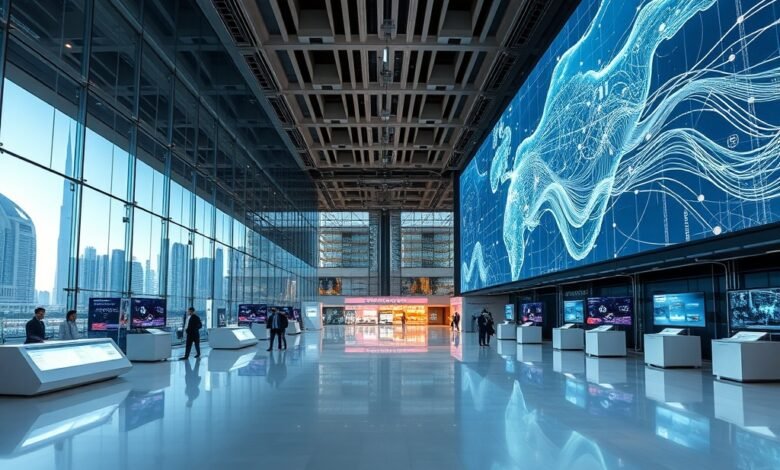
Digital Dubai orchestrated a joint presence that spanned three joint pavilions, eight live‑demo zones and a series of sector‑specific round‑tables. The coordination effort involved more than 20 ministries, statutory bodies and public‑sector enterprises, effectively turning a traditionally fragmented digital ecosystem into a unified market stall. This scale matters because it provides investors a single entry point to evaluate the entire public‑sector procurement pipeline, rather than negotiating with isolated agencies.
Why a Unified Pavilion Accelerates Deal Flow
- Visibility: International vendors can assess the maturity of Dubai’s AI‑surveillance, autonomous‑transport and digital‑licensing solutions in one location, shortening due‑diligence cycles.
- Standardisation: Joint sessions on AI governance and cloud cybersecurity reveal a common regulatory baseline, reducing compliance uncertainty for foreign firms.
- Cross‑selling: Start‑ups that win a pilot with Dubai Police can immediately pitch the same technology to the Roads and Transport Authority (RTA), leveraging shared APIs and data models.
Sectoral Impact: Public Safety, Transport and Business Licensing
The Dubai Police demo of AI‑powered surveillance combined facial‑recognition, predictive‑analytics and real‑time incident routing. For security‑tech investors, the showcase signals a shift from isolated proof‑of‑concepts to a city‑wide deployment schedule, implying multi‑year contract values that could exceed AED 1 billion across hardware, software and managed services.
The RTA’s autonomous‑vehicle pilot, integrated with the smart‑traffic management platform, illustrates a transition from pilot to commercial rollout. Assuming a conservative 30 % fleet conversion by 2027, the ancillary market for vehicle‑to‑infrastructure (V2I) sensors, data‑analytics platforms and edge‑cloud services could reach AED 500 million annually.
The Department of Economic Development’s new digital licensing portal cut processing time from an average of 10 days to under 24 hours. Faster licensing reduces the opportunity cost for foreign SMEs, improves the “ease of doing business” metric, and creates a recurring revenue stream for the underlying SaaS platform—estimated at AED 150 million in annual subscription fees once fully commercialised.
Open‑Data and API Economy: A New Revenue Stream for Innovators
The “Data Dubai” pavilion unveiled secure APIs that expose traffic, health, and economic data sets. By monetising these APIs through tiered access licences, the government creates a predictable cash flow while catalysing a third‑party app market. Early‑stage venture capitalists are already flagging the “Dubai Data Stack” as a seed‑stage opportunity, with projected market size of AED 200 million by 2026.
Investor Takeaway
Open data reduces the barrier to entry for fintech, mobility and citizen‑engagement startups, meaning capital can be deployed earlier in the product‑development lifecycle. The guaranteed demand from a sovereign client also improves risk‑adjusted returns for VC funds targeting the MENA tech ecosystem.
Regulatory Leadership: AI Governance, Cybersecurity Standards and Digital Identity
Round‑table discussions at GITEX tackled three regulatory pillars:
- AI Governance: Dubai’s proposed AI Ethics Board will issue certification for algorithmic transparency, a framework that could become the Gulf standard. Companies that align now gain a first‑mover advantage in compliance‑as‑a‑service offerings.
- Public‑Sector Cloud Security: A unified cybersecurity baseline—mandating ISO 27001, CSA STAR and local data‑residency clauses—creates a single procurement benchmark, simplifying vendor selection for multinational cloud providers.
- Digital Identity: The emirate’s e‑ID system, linked to the DubaiNow mobile app, is being positioned for cross‑border services (e.g., visa‑on‑arrival, e‑health). This opens a market for identity‑verification fintechs, projected to generate AED 80 million in licensing fees over the next five years.
Capital Flows and Talent Attraction: Aligning with the UAE 2030 Diversification Agenda
By broadcasting a cohesive, AI‑first public‑sector agenda on a global stage, Dubai signals a stable, long‑term policy environment—an essential criterion for sovereign wealth funds and private equity houses. The GITEX exposure is expected to lift inbound tech‑investment pipelines by 15–20 % annually, translating into an additional AED 3 billion of foreign direct investment (FDI) by 2028.
Talent pipelines are also reinforced: the joint workshops attracted over 200 international experts, many of whom cited Dubai as a preferred relocation destination. For the UAE’s broader economic diversification, the influx of high‑skill AI, data‑science and cybersecurity professionals directly supports the target of 25 % non‑oil GDP contribution by 2030.
Long‑Term Competitive Position: Dubai as the Gulf’s Smart‑City Testbed
The coordinated government presence at GITEX marks a strategic shift from “technology consumer” to “technology co‑creator.” By opening its data, standardising AI regulations and showcasing live pilots, Dubai creates a replicable model for neighbouring Gulf states. The ripple effect could standardise smart‑city procurement across the GCC, granting Dubai‑originated solutions a first‑right of refusal in regional tenders.
For investors, the implication is clear: early exposure to Dubai’s public‑sector ecosystem offers a gateway to the wider Middle‑East smart‑city market, estimated at over USD 30 billion in cumulative spend through 2035.
Conclusion: From Exhibition to Execution
Digital Dubai’s GITEX showcase is more than a marketing exercise; it is a calibrated signal to capital markets, technology vendors and the global talent pool that Dubai’s digital transformation is entering execution mode. The convergence of AI‑driven public services, open‑data monetisation, and unified regulatory frameworks reshapes the business landscape for every stakeholder—from local SMEs to multinational investors—while cementing Dubai’s role as the premier smart‑city hub of the Middle East.