
Dubai’s 2026 Tourism Push: Capital Flows, Investor Opportunities and Strategic Impact on the UAE Economy

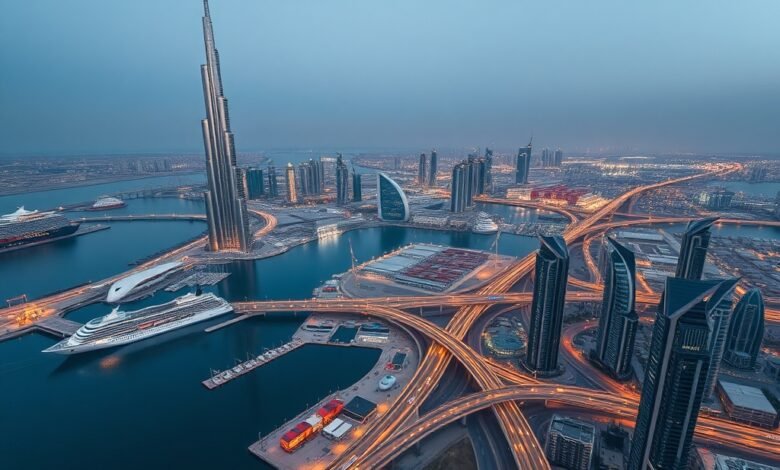
Why Dubai’s renewed tourism narrative matters for the UAE’s growth agenda
In early February 2026, a feature in Mathrubhumi English highlighted Dubai’s deliberate re‑branding from a “luxury‑only” destination to a multi‑segment tourism hub. The timing coincides with the strongest post‑crisis rebound in global travel, positioning Dubai to capture a larger share of inbound spend. For the UAE, tourism now accounts for roughly 12 % of GDP—a figure that government planners intend to lift to 15 % by 2030. The strategic significance lies not merely in visitor numbers but in the downstream capital that follows: hotel construction, theme‑park licensing, retail expansion, and ancillary logistics services.
Scale of infrastructure investment and its financing structure
Public‑private partnership model as the financing engine
Since 2022, Dubai’s Department of Tourism and Commerce Marketing (DTCM) has approved AED 45 billion (≈ US$12.3 billion) in new tourism‑related projects. Over 60 % of this capital is sourced through public‑private partnerships (PPPs), with sovereign wealth funds, regional banks and international hotel chains each contributing equity stakes. The PPP framework reduces fiscal exposure while guaranteeing a pipeline of high‑yield assets for private investors.
Key projects driving the next wave of visitor spend
- Al Qudra Adventure Zone: A 30‑million‑square‑meter desert‑sport complex slated for completion in 2028, projected to generate AED 3 billion in annual ancillary revenue.
- Marina Bay Cultural District: A mixed‑use development integrating museums, performance venues and boutique hotels, attracting an estimated 2 million cultural tourists per year.
- Extended Burj Khalifa Observation Deck: A 20‑storey vertical extension expected to increase tower‑related ticket sales by 40 %.
Investor implications across hospitality, real estate and ancillary services
Hospitality operators: re‑allocating capital from ultra‑luxury to mid‑scale segments
Data from the Dubai Hotel Association show that occupancy in the 3‑ to 4‑star tier rose from 58 % (2023) to 71 % (Q4 2025). Investors are therefore shifting allocation from ultra‑luxury brands, whose ADR (average daily rate) growth has plateaued at 2 % YoY, toward mid‑scale operators that command 8‑10 % ADR growth and higher RevPAR (revenue per available room) elasticity during peak seasons.
Real‑estate developers: leveraging tourism‑linked demand for mixed‑use assets
Dubai’s real‑estate market recorded a 12 % YoY increase in sales of tourism‑linked mixed‑use units in Q3 2025. Developers that integrate short‑term rental licensing into residential towers can command a premium of 15‑20 % over comparable non‑licensed units, a margin that is increasingly factored into valuation models by institutional investors.
Ancillary sectors—logistics, food & beverage, fintech—stand to gain from higher visitor throughput
Projected visitor growth of 9 % annually through 2029 translates into an estimated AED 6 billion boost in logistics spend (customs clearance, last‑mile delivery) and AED 4 billion in food‑service revenue. Fintech firms offering contactless payment solutions are already negotiating revenue‑share agreements with major malls, anticipating a 25 % increase in transaction volume per tourist.
Capital flow dynamics: sovereign wealth, regional banks and foreign direct investment (FDI)
Abu Dhabi Investment Authority (ADIA) and Mubadala have collectively earmarked AED 10 billion for tourism‑linked assets, citing “stable cash flows and strategic alignment with the UAE Vision 2030”. Regional banks such as Emirates NBD have launched dedicated tourism‑project financing desks, reporting a 30 % rise in loan origination for hotel and entertainment projects since 2024. Meanwhile, FDI inflows into Dubai’s tourism sector reached US$4.5 billion in 2025—a 22 % increase over 2024—driven largely by European and East‑Asian investors seeking exposure to the Gulf’s high‑growth leisure market.
Strategic positioning: Dubai versus competing regional hubs
Compared with Saudi Arabia’s Red Sea Project (estimated AED 70 billion) and Qatar’s post‑World Cup legacy plan (AED 18 billion), Dubai’s advantage lies in its mature regulatory framework, existing airline connectivity (over 200 destinations) and a well‑established hospitality ecosystem. The Mathrubhumi feature underscores the city’s “blend of traditions and innovation”, a narrative that resonates with high‑spending cultural tourists—a segment where Dubai now outperforms Riyadh by 15 % in average spend per visitor.
Risks, regulatory considerations and outlook through 2030
While the upside is clear, investors must monitor three risk vectors:
- Geopolitical volatility: Regional tensions could affect airline routes and insurance premiums for large‑scale construction.
- Regulatory tightening on short‑term rentals: The DTCM is reviewing licensing caps to protect housing affordability, potentially limiting the supply of tourist‑focused apartments.
- Environmental sustainability mandates: New green‑building codes will raise capex for hotels by an estimated 5‑7 % but may unlock ESG‑linked financing at lower cost of capital.
Assuming these variables remain manageable, the tourism sector is projected to contribute an additional AED 25 billion to the UAE’s GDP by 2030, reinforcing the federation’s diversification away from oil‑derived revenues.
Bottom line for investors and corporate decision‑makers
Dubai’s 2026 tourism promotion is not a marketing gimmick; it is a capital‑intensive, policy‑driven engine designed to generate sustained, high‑margin cash flows across multiple asset classes. Investors with exposure to hospitality, mixed‑use real‑estate, logistics, and fintech stand to capture incremental returns ranging from 8 % to 14 % IRR over the next five years. For corporate strategists, aligning expansion plans with Dubai’s tourism roadmap offers a clear pathway to tap into the UAE’s broader Vision 2030 diversification targets.