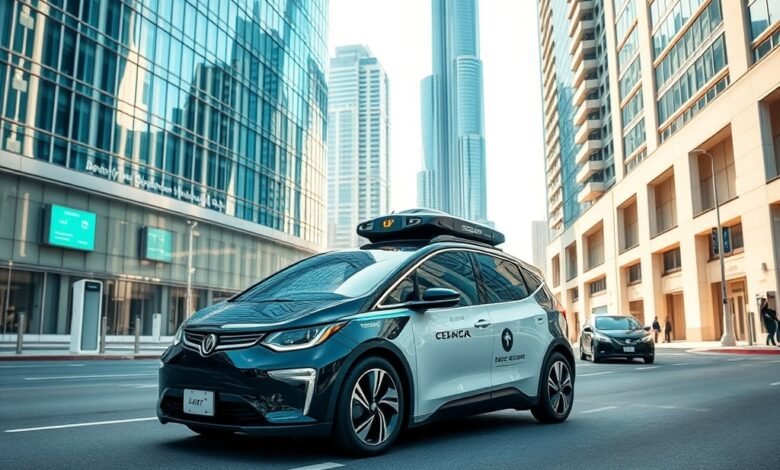
Dubai Launches First Fully Autonomous Taxi Fleet – Investor and Economic Implications

Strategic Context: A Decade‑Long Smart Mobility Roadmap
Dubai’s autonomous‑taxi rollout is the culmination of a ten‑year policy trajectory that positioned the emirate as a global test‑bed for smart‑city infrastructure. The government’s sustained capital allocation to electric‑vehicle charging networks, AI‑driven traffic‑control platforms, and limited‑scale autonomous‑vehicle pilots created a layered ecosystem where a driverless taxi service could be introduced without retrofitting the entire transport grid. For investors, the roadmap signals a predictable, government‑backed pipeline of technology‑focused projects that reduce execution risk and accelerate time‑to‑market for related hardware and software providers.
Infrastructure Foundations: EV Charging, Sensor‑Dense Roads, and Data Platforms
Every autonomous taxi relies on a dense mesh of high‑capacity chargers, roadside LiDAR and camera arrays, and a city‑wide data lake that aggregates real‑time traffic, weather and passenger‑demand signals. Dubai’s prior rollout of over 1,000 fast‑charging points and its open‑API traffic‑management system means the autonomous fleet can operate at scale from day one. Companies that supplied the underlying sensors, edge‑computing hardware, or data‑analytics services are now positioned to capture recurring revenue streams from service‑level agreements and platform‑as‑a‑service contracts.
Scale and Timing: The First Fully Autonomous Taxi Service on Commercial Scale
When the driverless taxis entered service earlier this week, they did so in designated urban zones that collectively account for roughly 15 % of Dubai’s intra‑city travel demand. The phased deployment—starting with high‑density commercial districts and expanding to residential corridors—allows the operator to validate safety protocols while simultaneously generating fare revenue. The timing coincides with a global surge in autonomous‑vehicle testing, placing Dubai ahead of most major metros that remain in the proof‑of‑concept stage.
Geographic Footprint and Phased Rollout
Initial coverage includes the Dubai Marina, Business Bay and Al Quoz clusters, areas where commuter trips average 12‑15 minutes and peak‑hour congestion exceeds 30 %. By inserting a driverless fleet into these choke points, the city expects measurable reductions in average travel time, which translates into higher passenger throughput and, consequently, a stronger unit‑economics case for the autonomous‑taxi operator.
Business Implications for Companies and Investors
Three distinct investment narratives emerge from the launch:
Ride‑Hailing Platforms and Fleet Operators
Traditional ride‑hailing firms operating in the UAE now face a competitive pivot. The autonomous fleet eliminates driver payroll—one of the highest variable costs in the sector—thereby compressing the cost‑per‑kilometre metric. Investors monitoring EBITDA margins can anticipate a re‑rating of valuation multiples for firms that either partner with the autonomous service or develop their own driverless units.
Technology Suppliers and AI Specialists
Companies that delivered perception stacks, high‑definition mapping, and real‑time decision‑making algorithms are entering a recurring‑revenue phase. Service contracts for software updates, over‑the‑air safety patches and data‑labeling services will generate predictable cash flows, attracting growth‑oriented capital. The Dubai deployment also serves as a reference case for future bids in other GCC capitals, expanding the addressable market for these suppliers.
Construction, Real Estate and Urban Planning Firms
Autonomous taxis reshape demand for curbside parking, drop‑off zones and mixed‑use developments. Real‑estate developers that integrate dedicated autonomous‑vehicle bays into new projects can command premium rents, while construction firms specializing in modular road‑side infrastructure stand to win public‑sector contracts for the next wave of expansion beyond the pilot zones.
Sectoral Ripple Effects: Automotive, Energy, AI and Real Estate
The autonomous‑taxi service acts as a catalyst across multiple sectors. Automotive OEMs with electric powertrains gain a new sales channel for battery‑electric vehicles, while energy utilities see increased load on fast‑charging stations, prompting investment in grid‑balancing assets. AI firms benefit from the continuous stream of sensor data that fuels model refinement, creating a virtuous loop of performance improvement and cost reduction. Meanwhile, the real‑estate market anticipates a shift from parking‑heavy designs toward pedestrian‑centric, transit‑oriented developments, influencing zoning policies and construction pipelines.
Policy, Regulation and Future Urban Planning
Dubai’s regulatory framework for autonomous mobility has evolved from permissive sandbox licences to a comprehensive safety‑certification regime that aligns with international standards (ISO 26262, UNECE R157). The city’s willingness to codify liability, data‑privacy and insurance structures provides a template for other jurisdictions. For investors, the clarity reduces legal uncertainty, encouraging larger capital commitments to both local start‑ups and multinational consortiums seeking to replicate the model.
Competitive Landscape: Dubai Sets a Benchmark for Global Cities
Only a handful of metros—such as Phoenix and Singapore—have launched limited autonomous‑taxi pilots, but none have done so at a commercial scale that integrates with an existing public‑transport network. Dubai’s approach demonstrates that a top‑down, infrastructure‑first strategy can accelerate market readiness. Cities grappling with congestion, air‑quality mandates and digital‑economy ambitions are now looking to Dubai’s playbook, creating potential export opportunities for consulting firms, technology integrators and financing houses that helped build the ecosystem.
Economic Impact on the UAE: Job Shifts, GDP Contribution and FDI Attraction
While driver‑less operation reduces the need for conventional taxi drivers, it simultaneously creates demand for high‑skill roles in vehicle maintenance, AI supervision, and fleet‑management analytics. Upskilling programs funded by the Dubai government aim to transition affected workers, mitigating short‑term employment disruption. From a macro perspective, the autonomous service adds a new revenue stream to the UAE’s non‑oil GDP, enhancing the emirate’s diversification agenda. Moreover, the visible success of a cutting‑edge mobility project strengthens Dubai’s brand as an FDI magnet for technology‑focused investors.
Why It Matters Now: Urbanization, Climate Targets and Capital Flows
The United Arab Emirates is confronting rapid urban population growth—projected to exceed 5 million residents in Dubai alone by 2030—while committing to net‑zero emissions by 2050. An autonomous, electric taxi fleet directly addresses both pressures: it reduces per‑capita vehicle kilometres, curtails tailpipe emissions, and optimizes road‑space utilization. Simultaneously, global capital is gravitating toward climate‑aligned, technology‑driven infrastructure. Dubai’s demonstrable progress positions it to capture a disproportionate share of that capital, reinforcing its status as the GCC’s innovation hub.
Conclusion: A Defining Moment for Smart‑City Investment
Dubai’s first fully autonomous taxi service is more than a transportation novelty; it is a strategic inflection point that redefines cost structures, unlocks new revenue models, and reshapes urban planning. For investors, the rollout signals a mature, government‑backed market where technology, infrastructure and policy converge to generate scalable returns. For the UAE economy, it accelerates diversification, supports climate objectives and cements Dubai’s reputation as a global benchmark for smart‑city transformation.

 with the direct government options available through GDRFA, ICP and the relevant company-licensing authority. Professional assistance can help coordinate paperwork, but visa eligibility should always be verified against the official immigration requirements rather than a consultant’s marketing claim. ## Common Dubai Investor Visa Mistakes ### Assuming Every Business Owner Gets a Five-Year Visa The Green Residence has specific eligibility and investment conditions. ### Confusing a Trade Licence With a Residence Permit A licence allows the company to conduct approved business activities. Residence is a separate immigration process. ### Comparing Only Government Visa Fees Medical, Emirates ID, insurance, status adjustment and professional services can change the full cost. ### Structuring Shareholding Only for Residency The ownership structure should make commercial and legal sense as well as meeting immigration requirements. ### Assuming a Free Zone Automatically Means Investor Visa Eligibility Free-zone company ownership and immigration qualification still need to satisfy the relevant rules. ### Treating the Golden Visa as the Standard Investor Visa Golden Residence has substantially higher qualifying thresholds than ordinary company ownership. ## Dubai Investor Visa Checklist for 2026 Before applying, confirm: - passport validity - company trade licence - legal form - shareholder or partnership documents - investment value - qualifying ownership percentage - current UAE immigration status - entry permit requirement - medical fitness requirement - Emirates ID process - health insurance - total government charges - family sponsorship plans - residence renewal conditions A clear checklist reduces the chance of creating a company that does not support the residence route the investor expected. ## Is a Dubai Investor Visa Worth Considering? For entrepreneurs who genuinely plan to own and operate a UAE business, a **Dubai investor visa** can provide a stable residency route without dependence on an employer. The five-year Green Residence can suit qualifying business investors and partners, while the 10-year Golden Residence provides a longer-term route for investors who meet the higher financial thresholds. The most important step is to separate three decisions: 1. what company the investor actually needs 2. how much capital will genuinely be invested 3. which residence category that structure qualifies for When those decisions are made together, company formation and immigration can support each other. When they are treated as the same thing, founders can end up with a licence that does not provide the residency they expected.](https://dubaitimes.ae/wp-content/uploads/2026/10/Dubai-Investor-Visa-Consultation-390x220.png)