
Dubai International Airport Sets Record International Seat Capacity, Reinforces Global Hub Status

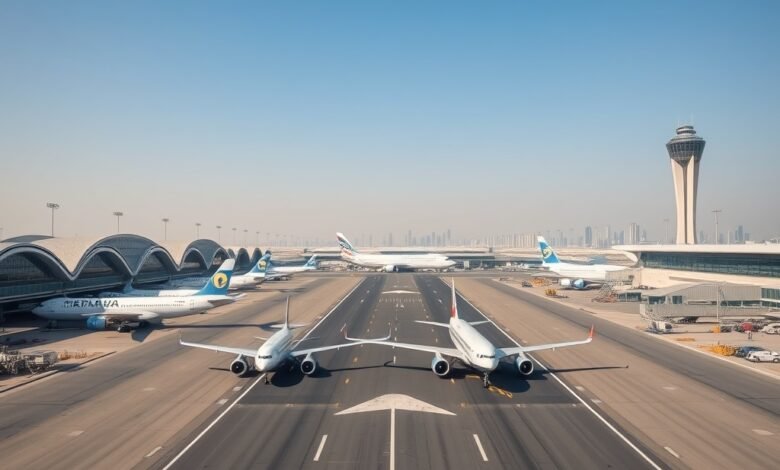
Why a New Seat‑Capacity Peak Redefines Dubai’s Aviation Business Landscape
The latest industry assessment places Dubai International Airport (DXB) at the summit of the world airport rankings while simultaneously announcing a record‑high international seat capacity. This dual achievement is not merely a statistical footnote; it signals a structural shift in how airlines allocate capacity, how investors evaluate regional exposure, and how the UAE’s broader economic diversification strategy is being operationalised.
Scale of the Milestone
The “record peak” in international seats translates into a larger volume of flight frequencies and an expanded route network. Each additional seat represents a sell‑through opportunity for airlines, a revenue‑generation node for ancillary service providers, and a data point for capital‑allocation models that weigh airport‑level demand elasticity against fleet deployment decisions.
Maintaining the Apex of Global Airport Rankings: Competitive Implications
Holding the top position in worldwide airport rankings provides DXB with a competitive moat. Rankings influence airline alliance negotiations, code‑share agreements, and hub‑selection criteria. By staying ahead, Dubai forces rival hubs—such as Singapore, Doha and Istanbul—to reassess their capacity strategies, potentially diverting traffic and investment toward the Emirates capital.
Strategic Leverage for Airlines
Air carriers operating out of DXB can leverage the airport’s ranking to justify premium pricing, enhanced slot allocations, and expanded lounge facilities. The prestige attached to a top‑ranked hub also strengthens marketing narratives that attract high‑yield business travelers, a segment that directly impacts airline yields and, by extension, investor confidence.
Infrastructure, Technology and Service Upgrades: The Engine Behind Capacity Growth
Achieving a record seat capacity required coordinated upgrades across terminal capacity, runway utilisation, and digital passenger‑flow management. While the data does not disclose exact capital outlays, the implication is clear: sustained investment is being channelled into expanding gate availability, automating baggage handling, and integrating AI‑driven scheduling tools. These enhancements reduce turnaround times, increase runway throughput, and improve on‑time performance—metrics that directly affect airline operating costs and investor risk assessments.
Capital Flow and Project Financing
Infrastructure expansion at a hub of DXB’s stature attracts sovereign wealth fund allocations, private‑equity participation, and export‑credit financing. The expectation of higher seat utilisation strengthens the case for long‑term debt instruments tied to airport revenue streams, offering investors a relatively stable, inflation‑linked return profile.
Economic Ripple Effects: From Jobs to Foreign Visitor Spending
The capacity surge is poised to generate a cascade of economic benefits. More seats mean higher passenger throughput, which fuels demand for ground‑handling services, retail concessions, hospitality, and logistics. Each incremental passenger contributes to non‑aeronautical revenue, a key profitability driver for airport operators and a source of fiscal inflow for the UAE.
Investor Outlook on the Aviation‑Linked Ecosystem
Investors tracking the UAE’s diversification agenda will interpret the record capacity as a leading indicator of sectoral robustness. Real‑estate developers near the airport, tourism operators, and multinational corporations seeking regional headquarters are likely to factor the enhanced connectivity into their location‑selection models, thereby amplifying capital inflows into ancillary industries.
Strategic Outlook: Future Expansion Plans and Market Positioning
Airport authorities have signalled intent to continue expansion and modernisation, suggesting that the current record is a waypoint rather than a ceiling. Anticipated initiatives—such as additional runway capacity, terminal extensions, and further digitalisation—will aim to preserve DXB’s ranking advantage and accommodate projected post‑recovery demand growth.
Implications for Regional Trade and Logistics
Beyond passenger traffic, a higher seat capacity often correlates with increased cargo belly‑hold capacity, strengthening Dubai’s role as a logistics gateway. This dual‑use advantage supports the Emirates’ broader ambition to be the primary conduit for trade between Asia, Europe and Africa, reinforcing the UAE’s position in global supply‑chain networks.
Conclusion: A Defining Moment for Dubai’s Aviation‑Centric Growth Model
Dubai International Airport’s record international seat capacity is a decisive business development that reshapes airline strategy, investor calculus, and the UAE’s economic trajectory. By coupling a top‑ranked status with tangible capacity growth, Dubai cements its role as a pivotal node in global air travel, ensuring that capital, talent and commerce continue to flow through its terminals for the foreseeable future.