

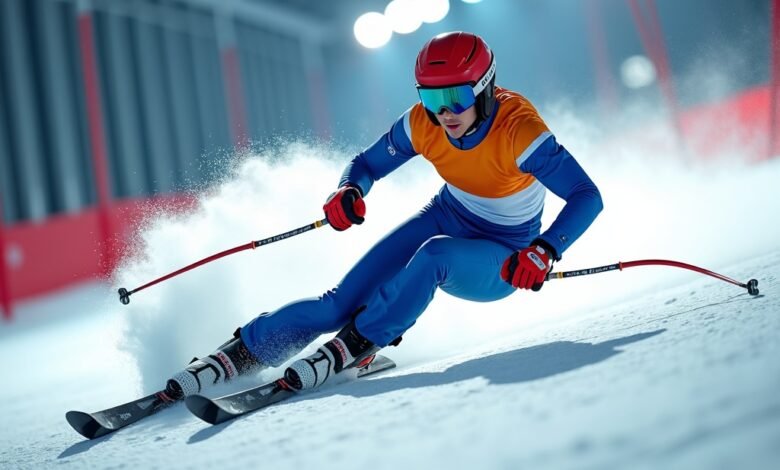
Elite skiers and snowboarders from three continents now train year-round at Ski Dubai, the desert nation’s indoor slope that has evolved from tourist novelty to professional training ground. National teams from Gulf states, emerging winter sports athletes from warm-climate nations, and international competitors regularly book dedicated training sessions at the Mall of the Emirates facility, seeking the consistent conditions that alpine locations cannot guarantee during summer months.
This transformation marks a significant shift in how the UAE approaches sports development beyond traditional powerhouses like football and cricket. The indoor skiing sector now attracts serious athletic investment, with professional-grade timing systems, dedicated coaching infrastructure, and training programs designed specifically for competitive development. For a nation where snow was virtually unknown just two decades ago, the emergence of world-class skiing facilities represents both a technological achievement and a strategic bet on sports diversification.
From Tourist Attraction to Elite Training Destination
Ski Dubai opened in December 2005 at Mall of the Emirates, initially conceived as an entertainment attraction that would give UAE residents and tourists their first experience of snow and skiing without traveling abroad. The facility featured a 400-meter slope with real snow, a snow park, and beginner-friendly terrain designed primarily for recreational visitors and families.
Over the following years, the operation expanded significantly. Additional runs were added, a dedicated freestyle zone appeared with jumps and rails, and the snow park grew to become one of the largest indoor snow play areas in the world. Critically, the operators began investing in training infrastructure that went beyond recreational instruction, installing timing gates for race training, creating video analysis zones, and developing relationships with national ski federations across the Gulf and wider Middle East.
The pivotal moment came when national sports councils recognized Dubai’s indoor facilities could serve as viable training bases for athletes who would otherwise need to travel to Europe or North America for consistent snow training. Programs began emerging that used Ski Dubai as a home base for developing competitive skiers and snowboarders, transforming the facility’s purpose in the process.
World-Class Facilities Behind Dubai’s Ski Revolution
Ski Dubai maintains conditions specifically designed to support professional training, with temperature controls keeping the snow surface at -2 to -4 degrees Celsius across all slopes. The snow is real, not artificial, produced through advanced snow-making systems that ensure consistent texture and grip throughout the year.
Slope Specifications and Snow Technology
- Primary slope extends 400 meters with a vertical drop of over 60 meters
- Multiple runs serving different skill levels from beginner to advanced
- Freestyle zone featuring jumps, half-pipe, and rail setups for snowboard and freeski training
- Dedicated race training slope with timing gate infrastructure
- Continuous snow grooming to maintain consistent surface conditions 24 hours daily
- Snow depth maintained at 45-60 centimeters across all training areas
Professional Training Infrastructure
- Electronic timing systems with photo-finish capability for race training
- Video analysis zones allowing athletes to review technique frame-by-frame
- Dedicated athlete changing facilities with equipment storage
- Certified instructors holding international ski teaching qualifications
- Freestyle coaches specializing in competition-level jumps and rail tricks
- Private training sessions available with advance booking for elite athletes
Elite Athletes Choosing Dubai for Year-Round Training
Professional skiers and snowboarders from multiple nations now incorporate Dubai into their annual training calendars. Gulf Cooperation Council national team programs use the facility for development camps, with athletes from Saudi Arabia, Qatar, Oman, and Bahrain regularly training at Ski Dubai during the summer months when alpine conditions are unavailable in their home countries.
International athletes from nations without nearby alpine terrain find Dubai particularly valuable. Athletes from Australia, South Africa, and across Asia use the facility to maintain training continuity without the expense and disruption of traveling to European glacier camps. The accessibility from major aviation hubs makes Dubai a practical stop for athletes traveling between continents.
Ski Dubai’s dedicated training sessions allow professional athletes to book slope time outside public operating hours, providing the privacy and space needed for serious technique work. This arrangement has attracted serious competitive training programs that would previously have considered only traditional alpine venues.
Why Professional Skiers Train in the Desert
Professional athletes choose Dubai for training because it offers unique advantages that no natural alpine location can match. The ability to train in consistent conditions year-round, regardless of season, allows athletes to maintain peak fitness and technique without the traditional off-season that limits alpine training to winter months.
From a practical standpoint, Dubai offers logistical benefits that reduce the burden on athletes and teams. No visa requirements for most major sporting nations mean athletes can arrive and train without the paperwork that complicates European travel. The flight times from major sports markets in Europe, Asia, and Australia typically range from 6 to 10 hours, making Dubai more accessible than many traditional alpine training destinations.
Climate control between runs allows athletes to recover in comfort, unlike the harsh conditions at high-altitude alpine venues where cold and altitude compound physical stress. The facility’s indoor environment also provides consistent visibility regardless of weather conditions, eliminating the variable that often disrupts training at outdoor slopes.
The cost equation favors Dubai compared to private training sessions at premium alpine resorts, where access fees, accommodation, and logistics quickly escalate. Athletes can achieve similar training value in Dubai at a fraction of the total cost, particularly when accounting for the ability to book dedicated professional sessions.
Success Stories: Athletes Who Rose Through Dubai’s Indoor Slopes
Emerging athletes from Gulf nations have used Dubai’s indoor facilities as foundations for competitive breakthroughs. Saudi Arabian skiers have developed skills at Ski Dubai that translated into competition results at regional winter sports events, representing a new pathway for athletes from a nation more commonly associated with desert sports.
Regional competitions held at the facility have produced notable results. Amateur and youth races have identified talent that has subsequently progressed to international competition, with several athletes now representing their nations in FIS-sanctioned events after developing initial skills on Dubai’s indoor slopes.
Warm-climate nations without traditional ski cultures have also used Dubai as a development base. Athletes from countries where skiing was virtually unknown have trained in Dubai and gone on to compete internationally, demonstrating the facility’s value in expanding access to winter sports for nations that lack natural snow environments.
The Future of Indoor Skiing and Winter Sports in the UAE
The trajectory suggests continued growth in both facility capacity and competitive ambition. While no major new indoor ski facilities have been publicly announced for immediate construction, the success of Ski Dubai has established a proof of concept that positions the UAE for broader winter sports development.
Discussions around hosting international competitions at Dubai facilities have gained momentum, with potential for FIS-sanctioned events that would bring global attention to the UAE’s winter sports capabilities. Such events would further establish Dubai as a serious destination for competitive skiing rather than merely a training location.
Youth development programs represent another growth vector. Schools and sports academies increasingly incorporate indoor skiing into their programs, introducing a new generation to winter sports through facilities that were previously unavailable in the region. This grassroots development could produce competitive athletes within the next decade.
What This Means for UAE Sports Development
The rise of professional indoor skiing training in Dubai reflects the UAE’s broader strategy of sports diversification beyond traditional powerhouses. Vision 2030 and Dubai Sports Council initiatives have prioritized developing non-traditional sports that position the Emirates as a hub for international athletic development.
Winter sports infrastructure attracts international events and athletes, generating tourism revenue while building domestic expertise. The success of facilities like Ski Dubai demonstrates that the UAE can compete globally in sports beyond the region’s established disciplines, attracting investment and attention that benefits the broader sports ecosystem.
This development also signals the UAE’s ambition to compete in global winter sports, a traditionally European and North American domain. By building world-class training facilities in an unlikely location, the Emirates have created a new model for sports development that other warm-climate nations may follow.
Frequently Asked Questions
Can professional skiers actually train effectively at indoor ski facilities in Dubai?
Yes, elite athletes from multiple disciplines now use Dubai facilities for year-round training. Professional-grade slopes, timing systems, and coaching infrastructure support serious competitive development, with national teams from Gulf states and international competitors regularly training at Ski Dubai.
Which indoor ski facilities are available in Dubai for training?
Ski Dubai at Mall of the Emirates is the primary facility, featuring multiple slopes, a dedicated freestyle zone, and training areas for alpine skiing and snowboarding disciplines. The facility offers both public sessions and dedicated training programs for athletes.
How does the snow quality at Dubai indoor ski facilities compare to natural snow?
Indoor facilities use real snow with advanced temperature and grooming systems maintaining conditions comparable to alpine environments. The controlled environment eliminates weather variables, providing consistent training conditions that many athletes prefer over natural snow conditions.
Are there competitive ski or snowboard events held in Dubai?
Dubai facilities host various amateur competitions and skill challenges, with timing infrastructure supporting race training. As the training scene matures, potential exists for larger international events that would establish Dubai as a competitive winter sports destination.
Can beginners or amateur skiers also train at Dubai’s indoor ski facilities?
Yes, facilities cater to all levels from complete beginners to professional athletes. Coaching programs, equipment rental, and dedicated learning slopes make Ski Dubai accessible for anyone wanting to learn or improve their skiing or snowboarding skills.
The transformation of Dubai’s indoor skiing scene from tourist attraction to professional training ground represents one of the most significant developments in UAE sports culture over the past decade. What began as a novelty experience for visitors has become a legitimate pathway for competitive winter sports development, attracting elite athletes from around the world who recognize the unique advantages of training in the desert.
This evolution signals the UAE’s serious ambitions in sports beyond traditional disciplines. As facilities continue developing and the region produces competitive athletes, Dubai’s indoor slopes may well become recognized as a global center for winter sports training.