
Dubai South’s 2025 Licence Surge Signals a New Era for UAE Aviation, Logistics and Real‑Estate Investment

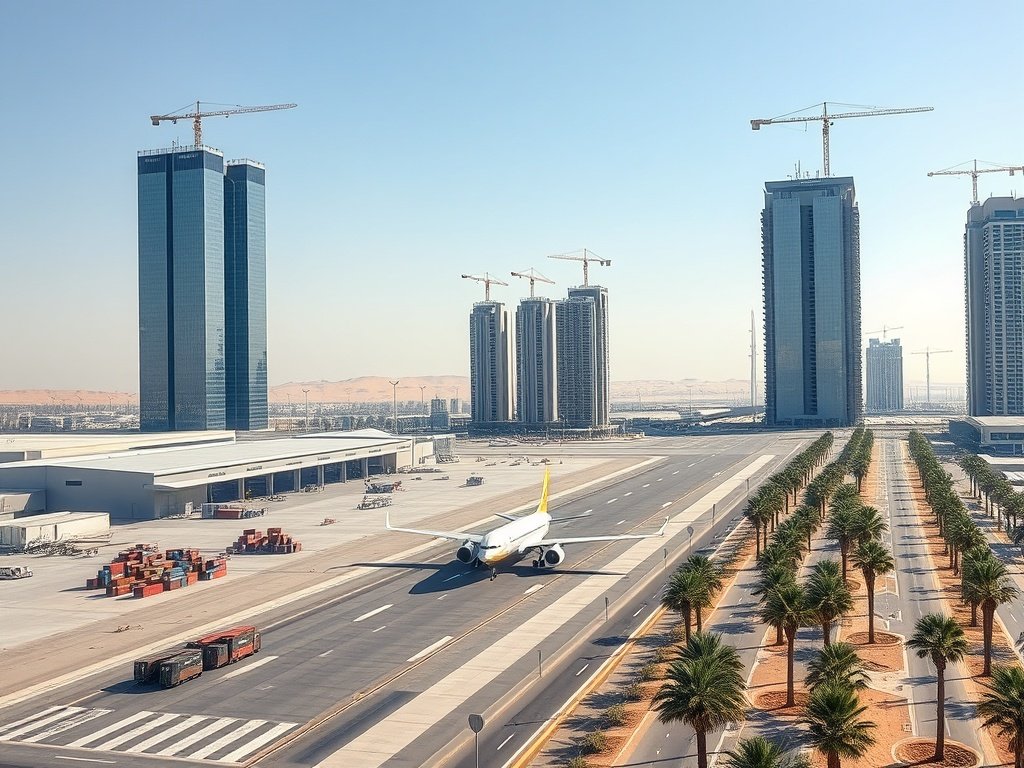
Why the 65 % Licence Jump Rewrites the Business Landscape
In 2025 Dubai South issued 653 new commercial licences, lifting the total resident‑enterprise count past 4,200 and delivering a year‑on‑year increase of roughly 65 %. This is not a statistical blip; it reflects a decisive shift in the cost‑structure and regulatory calculus for companies targeting the Middle East’s fastest‑growing trade corridor.
From Policy to Profit: The Incentive Stack That Drives Decision‑Making
The free‑zone’s 100 % foreign‑ownership rule, zero‑tax regime and fast‑track licensing process have collectively reduced the entry barrier for SMEs, multinationals and start‑ups. When the average time to obtain a commercial licence drops from weeks to days, capital allocation models tilt in favour of Dubai South, accelerating go‑to‑market timelines for e‑commerce fulfilment, air‑cargo handling and construction services.
Sectoral Ripple Effects: Logistics, Aviation and Real‑Estate
Each newly‑licensed entity adds a node to a densely interlinked supply chain. For logistics operators, the denser tenant mix translates into shorter last‑mile distances, lower freight costs and higher utilisation of the Al Maktoum International Airport’s cargo capacity. Aviation‑related firms—ground handlers, aircraft‑maintenance providers, and freight forwarders—gain immediate access to a captive client base, improving revenue predictability.
Real‑Estate Demand Accelerates in Parallel
The surge fuels demand for industrial warehouses, cold‑storage facilities and mixed‑use developments. Developers can now justify higher absorption rates for speculative builds, while investors see a more resilient cash‑flow profile anchored by long‑term tenants whose retention rate exceeds 90 %.
Investor Implications: Capital Flows and Risk‑Adjusted Returns
Capital providers should treat the 2025 licence data as a leading indicator of pipeline volume. Private‑equity funds targeting logistics tech, smart‑city platforms and aviation innovation will encounter a deeper deal‑sourcing pool, reducing due‑diligence costs per investment. Debt financiers, meanwhile, can leverage the zone’s strong tenant retention to negotiate tighter loan‑to‑value ratios, knowing that default risk is mitigated by the zone’s integrated customs and utility infrastructure.
Portfolio Diversification Within a Single Geographic Corridor
Investors can now construct multi‑asset portfolios—combining equity stakes in warehousing operators, mezzanine debt in airport‑adjacent infrastructure, and venture positions in start‑ups delivering AI‑driven freight optimisation—all under the umbrella of Dubai South’s regulatory certainty.
Macro‑Economic Alignment: Feeding UAE Vision 2030
Dubai South’s licence surge directly supports the UAE’s Vision 2030 target of raising non‑oil GDP contribution. The added enterprises generate ancillary revenue streams—utility consumption, professional services, and licensing fees—that feed into the fiscal framework without diluting the oil‑free growth narrative.
Mitigating Boom‑Bust Cycles in Free‑Zone Development
Historically, free‑zone projects have suffered from high churn, leading to under‑utilised infrastructure. A 90 % retention rate reverses that trend, providing a stable occupancy base that justifies continued public‑private investment in transport, digital customs platforms and green‑energy grids.
Infrastructure Outlook: Al Maktoum Airport Expansion and Digital Enablement
Al Maktoum International Airport is slated to handle up to 120 million passengers and 12 million tonnes of cargo annually. Each incremental cargo tonne translates into proportional demand for warehousing, customs clearance and value‑added services within Dubai South. Simultaneously, the rollout of a unified digital customs platform will cut clearance times by an estimated 30 %, sharpening the zone’s competitive edge against regional rivals such as Jebel Ali and Ras Al‑Khaimah.
Green‑Energy Initiatives as a New Investment Magnet
The upcoming solar‑powered micro‑grid and EV‑charging infrastructure align with ESG mandates increasingly embedded in institutional investment criteria. Companies that embed sustainability into their operating model will benefit from lower utility tariffs and heightened access to ESG‑linked financing.
Strategic Takeaways for Stakeholders
- Entrepreneurs: The 2025 licence surge validates Dubai South as a low‑risk, high‑access entry point for regional distribution and aviation‑adjacent services.
- Investors: A concentrated, high‑retention tenant base improves risk‑adjusted returns across equity, debt and venture allocations.
- Policymakers: The data underscores the efficacy of streamlined licensing and tax‑free incentives, suggesting a template for future free‑zone reforms.
- Developers: Accelerated demand for industrial and mixed‑use real‑estate presents an immediate pipeline of build‑to‑suit opportunities.
Conclusion: A Self‑Reinforcing Growth Engine
Dubai South’s 2025 performance illustrates a virtuous cycle: world‑class infrastructure attracts a critical mass of businesses; those businesses generate demand for deeper infrastructure and capital; investors respond with targeted financing, which in turn fuels further expansion. For anyone mapping the future of the UAE’s diversified, knowledge‑driven economy, the zone’s licence surge is the benchmark against which all subsequent free‑zone initiatives will be measured.