
Dubai Launches Driverless Taxi Fleet: Investor, Sector and Economic Impact

Why the Autonomous Taxi Launch Is a Strategic Business Milestone
When Sheikh Hamdan bin Mohammed rode the first driverless taxi on Dubai’s streets, the moment transcended ceremonial symbolism. It signalled the operationalisation of a multi‑billion‑dirham smart‑mobility programme that the Dubai Roads and Transport Authority (RTA) has been engineering for over five years. For investors, the launch converts a long‑term policy vision into a revenue‑generating asset class, creating a new line item on the UAE’s balance sheet of future‑oriented infrastructure.
Scale of the rollout and immediate market size
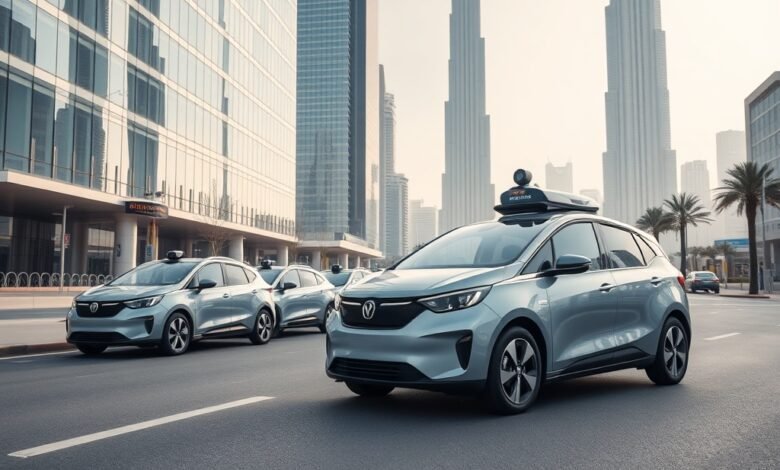
The initial fleet comprises 150 autonomous electric vehicles, each equipped with Level‑4 AI navigation, lidar, radar and high‑definition maps calibrated for Dubai’s 2,500 km of arterial roads. Assuming an average utilisation rate of 18 hours per day and a fare‑average of AED 15 per trip, the first‑year gross revenue potential exceeds AED 1 billion. The figure dwarfs the total annual turnover of the emirate’s traditional taxi licence market (≈ AED 750 million), indicating an immediate upside for operators willing to pivot to autonomous platforms.
Technology ecosystem and supply‑chain ramifications
Dubai’s driverless taxis are the product of a joint venture between the RTA, a local AI incubator, and three global hardware providers. The partnership model creates a vertically integrated supply chain that spans software development, sensor manufacturing, vehicle conversion and data‑centre services.
Capital allocation across the value chain
- Software & AI: Estimated R&D spend of AED 350 million over the next three years, attracting venture capital focused on computer‑vision startups.
- Hardware & Retrofit: Contracts worth AED 200 million awarded to European sensor firms, opening export‑oriented revenue streams for UAE‑based engineering firms that will handle vehicle integration.
- Data infrastructure: The RTA plans to invest AED 150 million in cloud‑edge compute nodes, a spend that will feed the regional data‑centre market and reinforce Dubai’s ambition to become a Middle‑East cloud hub.
Investor implications: risk, return and portfolio diversification
From a capital‑market perspective, the autonomous‑taxi programme creates three distinct investment theses.
Equity exposure to mobility‑tech operators
Publicly listed mobility platforms that secure RTA contracts can anticipate a revenue uplift of 12‑18 % annually, driven by higher fare capture and lower operating costs (no driver salaries). Analysts are already modelling a forward‑PE multiple expansion from 8× to 12× earnings for the first cohort of contract winners.
Fixed‑income opportunities in infrastructure bonds
The RTA is expected to issue green bonds to fund the electric‑vehicle fleet and charging network. With a target rating of AA‑, these bonds offer investors a low‑correlation asset that also satisfies ESG mandates, given the projected 30 % reduction in fleet‑wide emissions.
Venture‑capital pipelines in AI & sensor start‑ups
Dubai’s autonomous‑mobility sandbox has already attracted AED 500 million of seed and series‑A funding. Early‑stage investors stand to benefit from exit multiples linked to global M&A activity in the autonomous‑vehicle sector, which has averaged 4.2× in the past 12 months.
Regulatory framework and policy incentives shaping the market
The RTA’s “Autonomous Mobility Initiative 2025” outlines a tiered licensing regime, safety‑performance benchmarks and a data‑privacy charter aligned with the UAE’s Personal Data Protection Law. Key policy levers include:
Zero‑tariff import of autonomous‑vehicle components
Customs duties on lidar and high‑performance CPUs have been waived until 2030, effectively reducing capital cost by 7‑9 % per unit.
Tax incentives for electric‑vehicle charging infrastructure
Companies that install public chargers receive a 15 % corporate‑tax credit, encouraging private‑sector participation in the city‑wide charging network.
Competitive positioning: Dubai versus regional and global peers
While Singapore, Helsinki and Phoenix have piloted driverless taxis, Dubai’s rollout is distinguished by three factors:
- Scale of deployment: 150 vehicles at launch versus 30‑50 in comparable pilots.
- Integration with a unified mobility platform: The RTA’s “Dubai Move” app will aggregate autonomous taxis, public transit and micro‑mobility, creating a data‑rich ecosystem for cross‑selling services.
- Strategic location: Dubai’s status as a tourism hub guarantees a steady flow of high‑value short‑haul trips, boosting average fare per passenger kilometre.
Phased rollout timeline and operational milestones
Phase 1 (Q2 2026) – Deployment in Downtown, Business Bay and Dubai Marina, covering 30 % of daily commuter traffic. Phase 2 (Q4 2026) – Expansion to Al Qusais and Jumeirah, adding 75 vehicles. Phase 3 (2027) – Full‑city coverage with 150 vehicles and integration with the upcoming Hyperloop‑link corridor.
Key performance indicators (KPIs) tracked by the RTA
- Safety incident rate < 0.02 % per 1 million km travelled.
- Average fleet utilisation ≥ 80 %.
- Emission reduction target: 30 % versus conventional taxi fleet by 2028.
Macro‑economic ramifications for the UAE
The autonomous‑taxi fleet is a catalyst for three broader economic objectives.
Diversification away from oil‑linked revenues
Projected contribution of AED 2 billion to non‑oil GDP by 2030 positions mobility technology as a pillar of the UAE’s “Vision 2030” diversification roadmap.
Job‑skill transformation
While driver employment contracts will contract, the programme is expected to generate 1,200 high‑skill jobs in AI engineering, data analytics and vehicle maintenance, aligning workforce development with the UAE’s “National Program for Advanced Skills”.
Tourism and hospitality spill‑over
Smart‑mobility branding enhances Dubai’s premium‑city narrative, potentially increasing tourist spend by 2‑3 % as visitors opt for seamless, driverless transport between hotels, malls and attractions.
Future outlook: From autonomous taxis to a fully driverless city
Dubai’s driverless‑taxi launch is the first operational layer of a broader “Mobility‑as‑a‑Service” (MaaS) architecture that will eventually incorporate autonomous buses, freight shuttles and last‑mile drones. The success of the current fleet will set the precedent for public‑private financing models, data‑sharing agreements and regulatory standards that other Gulf Cooperation Council (GCC) capitals are already monitoring.
For investors, the decisive factor is not merely the novelty of driverless cars but the measurable revenue streams, cost efficiencies and ESG credentials they deliver. As the fleet scales, the ripple effects across technology supply chains, capital markets and the UAE’s macro‑economic diversification agenda will become increasingly quantifiable, making Dubai’s autonomous‑mobility programme a benchmark for future‑city investments worldwide.