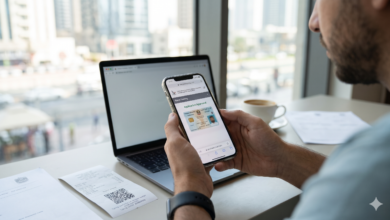
Opening a Corporate Bank Account in Dubai (2026): Step-by-Step Guide


Securing an active commercial trade license in Dubai has become remarkably fast, often completed in a matter of days through automated digital portals. However, international founders expanding into the UAE quickly discover that incorporating the entity is only half the battle. The true operational bottleneck in 2026 remains opening an active, fully functional UAE corporate bank account.
With the UAE Central Bank’s stringent anti-money laundering (AML) directives and alignment with global Financial Action Task Force (FATF) standards, commercial banks now operate with unprecedented regulatory scrutiny. Financial institutions evaluate not just the legal validity of your company, but the substantive economic reality of your business model.
Here is an objective breakdown of how international businesses, regional holdings, and startups can successfully navigate corporate banking compliance in Dubai in 2026.
1. The Real Reason UAE Corporate Bank Applications Face Delays
Many applicants assume that presenting a valid Department of Economy and Tourism (DET) license or Free Zone certificate guarantees account approval. In practice, compliance officers evaluate the complete risk profile of the ultimate beneficial owners (UBO) and their cross-border cash flow models.
The primary triggers for account delays or outright rejections include:
- Lack of Demonstrable Substance: Operating solely with a virtual flexi-desk while projecting millions in cross-border transfers often raises red flags during initial KYC (Know Your Customer) sweeps.
- Unclear Source of Wealth: Inability to provide verified personal bank statements (typically the last 6 months) showing consistent capital accumulation prior to the UAE business launch.
- Complex Multi-Jurisdictional Ownership: Corporate shareholders spanning offshore tax havens require extensive notarization, legalization, and certified translation through UAE Embassies abroad.
- High-Risk Business Activities: General trading, cryptocurrency services, payment intermediaries, and cross-border brokerage require specialized compliance files and higher minimum capital reserves.
2. Tier 1 vs. Digital-First Business Banking Options
Depending on the operational scale and working capital reserves of your enterprise, UAE banking generally falls into two distinct operational tiers:
A. Digital-First Commercial Platforms (Wio Business, Mashreq NeoBiz)
Digital neobanks have fundamentally transformed early-stage business banking across the Emirates.
- Average Onboarding Timeline: 3 to 7 business days.
- Minimum Balance Requirements: Low to zero monthly maintenance thresholds (often starting with zero balance or AED 10,000–AED 25,000 averages).
- Ideal Use Case: Single-shareholder consultancies, software agencies, digital marketing ventures, and boutique ecommerce operators needing instant IBAN issuance and local payment rails.
B. Traditional Tier-1 Institutions (Emirates NBD, FAB, ADCB, Dubai Islamic Bank)
Full-service commercial banks remain essential for multi-currency operations, structured trade finance, and letters of credit.
- Average Onboarding Timeline: 3 to 6 weeks, requiring direct face-to-face compliance interviews.
- Minimum Balance Requirements: Monthly average relationship balances typically range between AED 50,000 and AED 250,000 to avoid non-maintenance penalty charges.
- Ideal Use Case: Mid-market enterprises, import/export operators, construction contractors, and companies tendering for local government contracts.
3. The Mandatory Compliance Dossier: What Underwriters Review
To avoid repetitive document requests that drag onboarding past two months, institutional advisory desks recommend preparing a standardized compliance dossier prior to booking banker appointments.
According to procedural benchmarks tracked by UAE corporate formation specialists at Setup Dubai Business, corporate applications move significantly faster through risk underwriting when backed by verified business plans, customer invoice pipelines, and verified counterparty profiles.
Your bank submission file should systematically package:
- Corporate Identity: Original Certificate of Incorporation, Memorandum of Association (MOA), Trade License, and Share Certificates.
- Founder & Signatory Verification: Valid Passport copies, Emirates ID, UAE Resident Visas, and entry stamp records for all shareholders holding a 10%+ equity stake.
- Operational Evidence (Substance): Registered Ejari tenancy lease agreement for dedicated office space or utility records confirming physical presence.
- Commercial Paper Trail: At least 3 executed supplier agreements, 3 prospective client letters of intent (LOIs), or verified contracts demonstrating real commercial demand.
- Historical Financial Records: 6 months of personal bank statements for all UBOs, plus 6 to 12 months of company bank statements if expanding an existing overseas parent firm.
4. Cross-Border Structures and Institutional Advisory
Founders structuring operations across multiple jurisdictions—such as expanding concurrently between the UAE, Saudi Arabia, and regional GCC markets—frequently face compounded compliance requirements.
In multi-market expansion setups, standard templates rarely suffice. Cross-border corporate advisory practices like Incorpyfy frequently highlight that aligning shareholder agreements, regional tax residency declarations, and statutory corporate registers across Gulf markets is essential before approaching institutional bankers, as discrepancies between regional trade registers often trigger automatic risk holds.
Furthermore, businesses handling high-stakes corporate partnerships, specialized commercial contracts, or formal dispute mitigation structures often integrate local institutional guidelines. Entities tracking commercial frameworks frequently consult established dispute and commercial advisory references such as the Dubai International Arbitration Centre (DIAC) to ensure commercial agreements, shareholder contracts, and governing dispute clauses conform precisely to prevailing UAE corporate dispute conventions.
5. Practical Strategies to Accelerate Account Approval
- Maintain Professional Financial Footprints: Do not route initial company operational expenses through personal payment cards. Maintain clear audit trails from the first transaction.
- Build an Active Digital Presence: Corporate banking underwriters routinely inspect your company domain, corporate email extensions, and LinkedIn company presence during desk reviews. Dormant or generic placeholder sites can stall underwriting.
- Specify Trading Counterparties Clearly: Avoid listing sanctioned jurisdictions or high-risk geographical regions in your projected incoming/outgoing wire lists during the initial account opening questionnaire.
- Match Your License Activity to Transactions: Ensure the description on incoming invoices matches the approved economic activities listed on your commercial trade license.
Looking Ahead
While the UAE banking environment demands thorough documentation and adherence to global anti-money laundering standards, the infrastructure provides businesses with unparalleled capital mobility and international currency freedom once onboarded. Founders who treat corporate banking as a rigorous compliance exercise rather than an administrative afterthought consistently secure active operational accounts with minimal friction.