

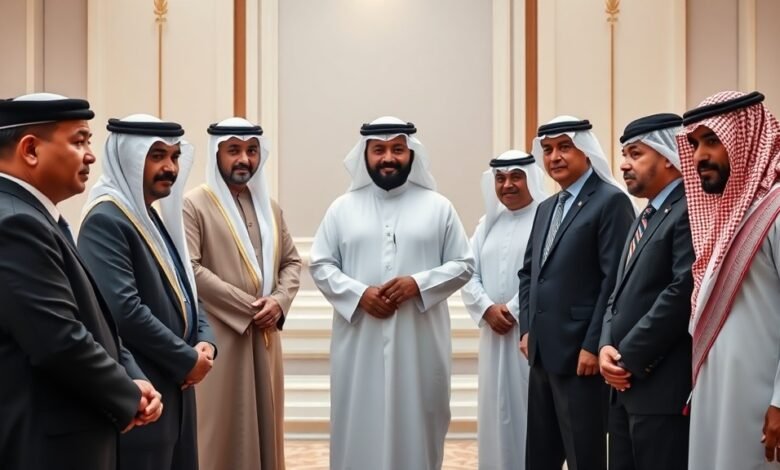
Indonesia’s defence minister and senior politician Prabowo Subianto landed in Abu Dhabi on Monday, marking a high‑profile Prabowo UAE diplomatic visit that analysts say could reshape the economic corridor between the Gulf’s energy wealth and Southeast Asia’s fast‑growing markets. The delegation, accompanied by senior business leaders and trade officials, met the rulers of the seven emirates in a series of closed‑door talks that culminated in a slate of memoranda of understanding. Observers view the trip as a turning point for Indonesia UAE relations, positioning Jakarta as a strategic bridge for trade, investment, and security cooperation across the region.
Key Highlights
- Signing of a USD 2 billion investment framework for renewable energy projects in Abu Dhabi and Dubai.
- Agreement on a joint logistics hub linking Jebel Ali port with Indonesian free‑trade zones.
- Launch of a defence technology exchange programme under the Prabowo strategic partnership.
- Commitment to double halal food exports from Indonesia to the UAE by 2027.
- Establishment of a high‑level task force to coordinate future Gulf‑Southeast Asia initiatives.
Background of Prabowo’s Visit
The Prabowo UAE diplomatic visit was scheduled to coincide with the Abu Dhabi summit 2024, a gathering that brings together Gulf leaders, Asian partners, and Western delegations. Jakarta’s agenda focused on deepening economic ties that have traditionally centred on oil and gas, while also showcasing Indonesia’s emerging role in renewable energy, digital trade, and defence manufacturing. Previous milestones in Indonesia UAE relations include a 2019 free‑trade agreement and a series of cultural exchange programmes that laid the groundwork for today’s intensified dialogue. Domestically, Prabowo’s outreach reflects Indonesia’s strategic pivot toward diversified partnerships as the country prepares for its 2024 presidential election, seeking to demonstrate tangible foreign‑policy wins.
The Seven Emirates: Leaders and Their Roles
During the summit, Prabowo met the rulers of all seven emirates, each bringing distinct priorities to the table. Sheikh Mohammed bin Zayed Al Nahyan, President of the UAE and ruler of Abu Dhabi, championed renewable‑energy cooperation and defence collaboration. Sheikh Mohammed bin Rashid Al Maktoum of Dubai highlighted logistics, tourism, and the ambition to make Jebel Ali a gateway to Southeast Asia. The leaders of Sharjah, Ajman, Umm Al‑Quwain, Ras Al‑Khaimah, and Fujairah emphasized niche sectors such as maritime services, halal food certification, and aerospace engineering. Collectively, the seven emirates leaders expressed a shared vision of leveraging Indonesia’s market size—over 270 million consumers—to diversify their economies beyond oil.
Strategic Agreements Signed
The core of the Prabowo UAE diplomatic visit was a bundle of strategic agreements. A USD 2 billion investment framework was inked to develop solar farms in Abu Dhabi and wind projects in Dubai, tapping Indonesia’s expertise in renewable technology. An energy‑cooperation MoU will see Emirati firms partner with Indonesian state‑owned enterprises to explore hydrogen production for export. Defence pacts include joint training exercises, technology transfer for unmanned aerial systems, and a procurement pipeline for Indonesian‑made small‑arms. Additionally, a comprehensive trade deal aims to cut tariffs on Indonesian textiles, electronics, and halal food products, reinforcing the broader Middle East Indonesia ties that have grown steadily over the past decade.
Economic Impact on Dubai and the UAE
Analysts project that the new agreements could boost UAE‑Indonesia trade by up to 30 percent within five years, driven primarily by logistics and energy sectors. Dubai’s strategic location as a re‑export hub stands to gain from the planned joint logistics centre, which will streamline cargo flow between Jebel Ali and Indonesian free‑trade zones such as Batam and Bintan. The tourism board anticipates a surge in Indonesian visitors, attracted by Dubai’s luxury market and halal‑friendly offerings. Meanwhile, the halal food agreement is set to expand Indonesia’s market share in the Gulf, providing new outlets for small‑scale producers and reinforcing the UAE’s reputation as a global halal hub.
Implications for Regional Politics
The visit arrives at a delicate moment as both Jakarta and Abu Dhabi navigate great‑power competition between the United States and China. By deepening ties with the UAE, Indonesia signals a willingness to diversify its strategic partnerships while maintaining a non‑aligned stance. The Prabowo strategic partnership could serve as a model for broader Gulf‑Southeast Asia cooperation, encouraging other Gulf states to explore similar bridges with ASEAN economies. Moreover, the defence component may subtly shift the regional balance, offering the UAE a foothold in the Indo‑Pacific without overtly aligning with any single superpower.
Future Outlook and Next Steps
Following the summit, a series of follow‑up meetings are scheduled in Jakarta, Dubai, and Jakarta’s new “Silk Road” economic corridor. A joint task force, chaired by senior officials from both sides, will monitor implementation milestones and resolve any regulatory bottlenecks. Business leaders are advised to watch for tender opportunities in renewable‑energy projects, logistics infrastructure, and halal certification services. The roadmap also envisions a biennial “Gulf‑Southeast Asia Forum” to institutionalise dialogue, ensuring that the momentum generated by the Prabowo UAE diplomatic visit translates into sustained, measurable outcomes.
Frequently Asked Questions
How many UAE emirates did Prabowo meet?
Prabowo met the rulers of all seven emirates during his stay, engaging each leader in focused discussions on trade, energy, and security cooperation.
What key agreements were signed during the Abu Dhabi visit?
The summit produced a USD 2 billion renewable‑energy investment framework, a joint logistics hub MoU, a defence technology exchange programme, and a comprehensive trade deal to boost halal food and textile exports.
How will the visit affect Indonesia‑UAE trade relations?
Trade is expected to grow by as much as 30 percent over the next five years, driven by new energy projects, streamlined logistics, and expanded halal food markets, strengthening the overall Indonesia UAE relations.
What are the next steps for the strategic partnership?
A joint task force will oversee implementation, while follow‑up meetings in Jakarta and Dubai will fine‑tune project details. A biennial Gulf‑Southeast Asia Forum is also planned to keep the partnership on a forward trajectory.
As the dust settles on the Prabowo UAE diplomatic visit, both nations appear poised to convert diplomatic momentum into concrete economic and security outcomes. With the Gulf’s capital, energy‑rich resources now linked to Indonesia’s demographic dividend, the partnership promises to reshape trade routes, investment flows, and geopolitical alignments across two continents. The coming months will reveal how quickly the agreements move from paper to practice, but the strategic bridge built in Abu Dhabi is already a landmark in the evolving narrative of Middle East Indonesia ties.
Source: Antara News – Prabowo joins rulers of seven emirates in Abu Dhabi