
Dubai Scooter Crash Triggers Strategic Shift in Urban Mobility Policy and Investment

Why a Single Collision Redefines the Business Landscape for Personal Mobility
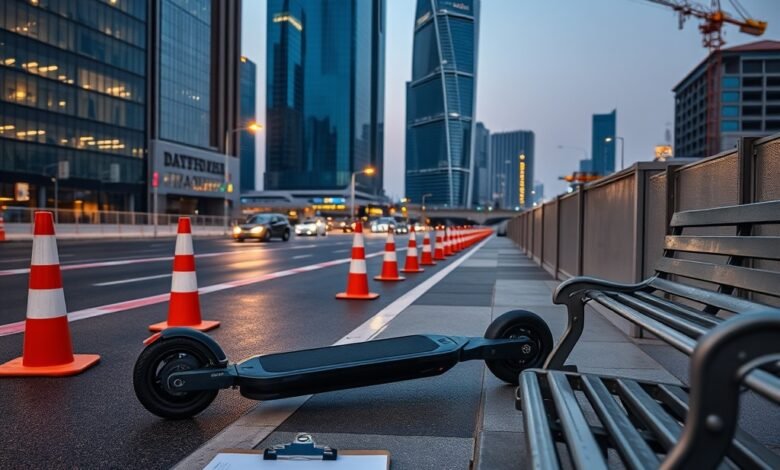
On 6 February 2026 a scooter rider suffered critical injuries after a car‑scooter collision in one of Dubai’s most congested districts. The driver remained at the scene, cooperating with police, while emergency services rushed the victim to hospital. Beyond the human tragedy, the incident prompted an immediate advisory from Dubai Police that stresses stricter adherence to traffic rules, safe following distances, and heightened vigilance in mixed‑traffic zones.
This advisory is not an isolated safety reminder; it signals a pivot point for every stakeholder that profits from, funds, or regulates personal mobility devices (PMDs) in the emirate. The event forces companies, investors, and policymakers to reassess risk exposure, operational models, and capital allocation.
Investor Risk Re‑Calibration in the Wake of New Safety Advisories
Immediate impact on valuation assumptions
Equity holders in scooter‑sharing platforms and electric‑mobility startups must now embed a higher safety‑compliance cost line into financial models. The advisory implies that future operating expenses—driver‑training programs, rider‑education campaigns, and insurance premiums—will rise, compressing EBITDA margins that previously benefited from low‑cost, high‑turnover usage.
Capital‑raising dynamics for mobility ventures
Venture capital and private‑equity funds targeting the UAE’s green‑transport segment will likely demand tighter governance clauses. Due‑diligence checklists will expand to verify that portfolio companies have concrete road‑safety protocols, real‑time monitoring, and collaborative frameworks with municipal authorities. The heightened scrutiny could lengthen fundraising cycles and shift investor preference toward firms with proven safety track records.
Infrastructure Funding: From Reactive Repairs to Proactive Design
Municipal budget re‑allocation
Dubai’s transport authority is expected to divert a portion of its infrastructure budget toward dedicated scooter lanes, enhanced signage, and sensor‑based speed‑control zones. Such capital projects generate immediate opportunities for construction firms, smart‑city technology providers, and IoT sensor manufacturers seeking contracts linked to “safety‑first” urban design.
Public‑private partnership (PPP) prospects
The advisory creates a policy environment conducive to PPPs that blend private mobility operators with public‑sector infrastructure upgrades. Companies that can bundle fleet management with lane‑maintenance services will be positioned to capture recurring revenue streams, effectively turning a safety concern into a long‑term income source.
Regulatory Landscape: Anticipated Amendments and Their Business Consequences
Potential tightening of licensing and registration
Dubai Police’s call for “ongoing precautions and responsible riding” hints at forthcoming licensing reforms—potentially mandatory registration of all electric scooters, stricter age limits, and compulsory safety‑gear enforcement. Compliance costs will rise for operators that must integrate registration APIs and enforce gear usage through in‑app penalties.
Enforcement technology as a market catalyst
To monitor compliance, authorities may deploy AI‑driven traffic cameras and real‑time violation detection platforms. This creates a nascent market for vision‑analytics firms and data‑integration specialists, while simultaneously raising the bar for operators that must ensure their fleets are compatible with such enforcement ecosystems.
Sector‑Wide Business Outlook: From Growth Momentum to Controlled Expansion
Short‑term slowdown versus long‑term resilience
The immediate reaction will likely be a dip in rider acquisition as public perception of scooter safety tightens. However, firms that proactively align with the advisory—by launching safety‑training modules, partnering with hospitals for rapid response, or lobbying for dedicated lanes—can convert the setback into a competitive advantage, preserving market share while rivals scramble to adapt.
Strategic diversification opportunities
Mobility operators may explore diversification into complementary services such as micro‑logistics, last‑mile delivery, or corporate‑fleet leasing, where controlled routes and corporate oversight mitigate public‑road risk. This strategic shift can offset revenue volatility stemming from reduced consumer riding frequency.
Strategic Recommendations for Stakeholders
For operators
- Integrate mandatory safety‑briefing videos into the onboarding flow.
- Deploy geofencing to restrict scooter operation in high‑risk zones identified by traffic data.
- Negotiate joint‑venture agreements with city planners to co‑fund dedicated lanes.
For investors
- Re‑weight portfolio exposure toward firms with documented safety‑compliance frameworks.
- Seek co‑investment opportunities in infrastructure‑tech startups that complement mobility assets.
- Monitor regulatory filings for early signals of licensing changes.
For policymakers
- Commission a data‑driven impact study to quantify accident hotspots and guide lane‑allocation decisions.
- Introduce a tiered insurance scheme that incentivizes operators to meet safety benchmarks.
- Facilitate a sandbox environment where pilots of AI‑enforced compliance can be tested before city‑wide rollout.
Conclusion: A Turning Point for Dubai’s Eco‑Mobility Ambitions
The February 6 scooter‑car collision has transcended its immediate tragic narrative to become a catalyst for a comprehensive re‑evaluation of Dubai’s personal‑mobility ecosystem. By foregrounding safety, the advisory reshapes cost structures, redirects capital flows, and forces a strategic realignment across operators, investors, and regulators. Companies that internalize these shifts early will not only safeguard their bottom line but also position themselves as the standard‑bearers of a safer, more sustainable urban transport future.